Ⅰ. Introduction
Following COVID-19, international traffic recovered slowly, while domestic demand in Korea rebounded strongly, driven by low-cost carriers (LCCs) on short-haul routes. By 2023, domestic passenger volumes exceeded prepandemic levels, with FSC capacity increasing from 24 to 41 million and LCC capacity from 33 to over 50 million, surpassing FSCs for the first time (MOLIT, 2023).
This growth was accompanied by notable delays. Between December 2024 and January 2025, the average domestic delay was 39.5 minutes, with approximately 20% of flights operating behind schedule (MOLIT, 2025). (MOLIT, 2025). The Gimpo–Jeju corridor—the world’s busiest air route (OAG, 2024)—experienced cascading knock-on effects. LCCs recorded slightly higher delay rates than FSCs (18.1% vs. 17.7%) (Korea Airports Corporation, 2025). Compared with FSCs’ larger aircraft and longer turnaround times, the high-frequency rotations of LCCs leave them more vulnerable to compounded disruptions. Delays cause more than inconvenience: recurrent disruptions intensify workload, fatigue, time pressure, and uncertainty—factors linked to human error and degraded safety. Thus, delays should be recognized as latent safety hazards within airline operations.
In 2023, 23% of domestic flights were delayed, primarily due to aircraft rotation (66%), followed by traffic flow (10.6%) and airport/immigration (9.4%) (MOLIT, 2024; Korea Airports Corporation, 2025). With higher sector frequencies, LCC pilots are especially vulnerable to increased workload. However, how specific delay categories contribute to workload—and its link to human error—remains underexplored.
This study therefore examines; (i) associations between delay types and mediators such as fatigue, time pressure, and uncertainty; (ii) causal pathways connecting mediators to human error; and (iii) safety implications of delays to propose evidence-based counter measures.
Flight delays—defined as departures or arrivals later than scheduled—are regulated differently across jurisdictions. In the United States, the FAA tracks delays of 15 minutes or more, and consumer protection regulations for extended disruptions, including tarmac delays, are enforced by the DOT (FAA, 2023; DOT, 2023). In Korea, MOLIT revised its 2023 guidelines to classify delays exceeding 15 minutes, replacing the former 30- and 60-minute thresholds (MOLIT, 2023). The causes of delays are multifaceted, including weather, maintenance, passenger handling, ground operations, crew, congestion, and air traffic restrictions. In 2023, U.S. airlines recorded 78.1% on-time performance, with connections accounting for nearly 14% of delays (DOT, 2023). In Korea, aircraft rotation represented 66.0% of all delays, followed by traffic flow (10.6%) and airport or immigration procedures (9.4%) (Korea Airports Corporation, 2025). These patterns highlight systemic disruptions that heighten pilot workload by increasing time pressure, uncertainty, and fatigue. Prior research has emphasized integrated strategies: Kang (2020) analyzed aircraft and airport factors, while Lee (2017) suggested schedule padding and adjusted connection times.
Workload in aviation refers to the mental, physical, and temporal demands placed on crew. ICAO (2013) defines it as “the relationship between the demands of a task and the operator’s resources.” Normally managed through crew resource management, workload rises sharply during delays. LCCs are especially vulnerable due to high daily frequencies and tight turnarounds, which reduce recovery buffers. Delay conditions generate (i) time pressure from shortened preparation, (ii) uncertainty from irregular sequencing, and (iii) fatigue from cumulative duties. Min (2023) reported that workload and fatigue on Korean short-haul routes are strongly linked to duty patterns, sleep, and job satisfaction, while Kim (2016) found fatigue significantly increased accident risk. Collectively, these studies show workload is both an efficiency and safety determinant.
Consistent with international human factors research, a domestic study published in the Journal of the Korean Society for Aviation and Aeronautics also reported that pilot fatigue and increased workload are significantly associated with degraded flight safety in the Korean aviation context (Kim & Lee, 2018).
Human error is a leading contributor to aviation accidents. Reason’s (1990) Swiss Cheese Model explains accidents as breaches of multiple defense layers. Flight errors manifest as slips, lapses, mistakes, or violations, all influenced by workload, fatigue, and stress. Delay-prone environments compress turnarounds, intensify task demands, and impair vigilance. LCC pilots, operating at high operational frequencies with minimal buffers, face elevated risks. Kim (2022) demonstrated a strong link between human error and accidents in aviation cases. These findings underscore the need for organizational measures such as realistic scheduling and fatigue management, along with regulatory safeguards to preserve safety margins.
Ⅱ. Research Design and Hypotheses
This study employs a quantitative, surveybased design to examine the impact of flight delays on pilot workload and the mediating role of workload in the occurrence of human error within domestic low-cost carrier (LCC) operations. The conceptual framework builds upon prior empirical studies in aviation human factors, incorporating validated constructs for workload, fatigue, time pressure, operational uncertainty, and human error. A cross-sectional survey approach was adopted, with data collected at a single point in time from active LCC pilots. This design enables statistical examination of interrelationships among variables while accounting for demographic and operational characteristics.
Specifically, the study investigates :
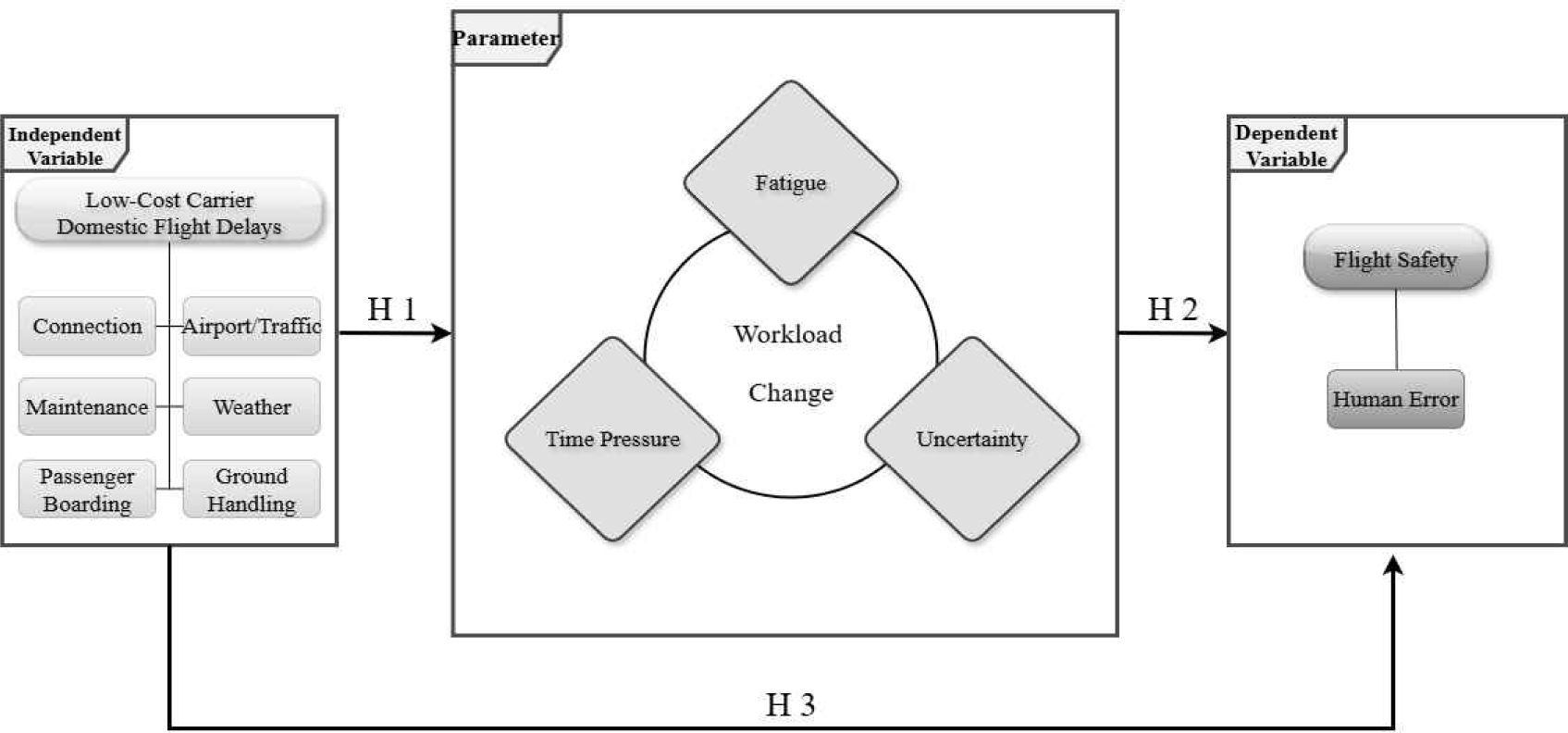
According to the Figure 1, the proposed research model posits that flight delays exert a direct positive influence on pilot workload and that heightened workload, in turn, increases the likelihood of human error. Furthermore, workload is hypothesized to mediate the relationship between flight delays and human error.
Hypothesis :
H1. Categories of flight delays in LCC operations significantly increase pilot workload.
H1-1. Aircraft connection delays significantly increase pilot workload.
H1-2. Aircraft maintenance delays significantly increase pilot workload.
H1-3. Weather-related delays significantly increase pilot workload.
H1-4. Airport/ATC delays significantly increase pilot workload.
H1-5. Ground handling delays significantly increase pilot workload.
H1-6. Passenger check-in and boarding delays significantly increase pilot workload.
H2. Elevated pilot workload significantly increases the likelihood of human error in flight operations.
H3. Pilot workload mediates the relationship between flight delays and the occurrence of human error.
The study sample consisted of 181 LCC pilots (captains and first officers) operating domestic routes in the Republic of Korea as of April 2025. Pilots employed by full-service carriers (FSCs), hybrid service carriers (HSCs), and cargo carriers were excluded to ensure focus on LCC-specific operations. The sample encompassed diverse demographic profiles, including flight experience, total accumulated flight hours, and rank, thereby enhancing representativeness and reliability of the findings.
A structured questionnaire was developed to measure flight delays, workload, and human error. Data were collected online via Google Forms between April 1 and April 15, 2025, yielding 181 valid responses. All items were rated on a five-point Likert scale (1=strongly disagree, 5=strongly agree). Reliability and validity were evaluated using principal component analysis (PCA) and Cronbach’s α coefficients, confirming acceptable levels of internal consistency and convergent validity.
Data collection was conducted from April 1 to April 15, 2025, through electronic distribution using pilot professional networks and airline internal communication systems. Participation was voluntary, and strict assurances of confidentiality and anonymity were provided. The survey was administered in accordance with the Korean Statistics Act (Articles 13 and 14), which stipulates the protection of confidentiality and mandates the exclusive use of data for research purposes. The study protocol received prior approval from the relevant Institutional Review Board (IRB).
All statistical analyses were performed using IBM SPSS Statistics V29.0.2.0. The analysis procedures included.
-
✓ Descriptive Statistics – Used to summarize demographic and operational characteristics.
-
✓ Reliability Analysis – Cronbach’s α values were computed for each construct to assess internal consistency.
-
✓ Correlation Analysis – Pearson correlation coefficients were used to examine relationships between variables.
-
✓ Regression Analysis – Conducted to test the direct effects hypothesized in H1 and H2.
-
✓ Mediation Analysis – Performed using Hayes’ PROCESS Macro (Model 4) with bootstrapping to test H3, providing.
confidence interval estimation. A significance level of p<0.05 was adopted for all hypothesis tests.
In this study, PCA was used solely as an exploratory technique for construct validation and dimensionality assessment prior to hypothesis testing. The scope of PCA was limited to identifying underlying component structures and ensuring measurement adequacy, and it was not intended for confirmatory or causal modeling purposes.
A frequency analysis was conducted using IBM SPSS Statistics V29.0.2.0 to examine the demographic characteristics of 181 pilots employed at domestic low-cost carriers (LCCs), excluding full-service carriers, hybrid service carriers, and cargo airlines. The survey was conducted from April 1 to April 15, 2025, and collected data on gender, age, career experience, total flight hours, and rank. The sample consisted predominantly of male pilots (98.3%), with only 1.7% female. Participants were primarily in their 40s (57.5%), followed by those in their 30s (29.8%), 50s (9.9%), and 60s or older (2.8%), with no respondents under 30. Regarding airline career experience, the largest group (40.9%) had over 10 years, followed by 5–8 years (22.1%), 8–10 years (17.7%), 2 years or less (9.9%), and 2–5 years (9.4%).
Ⅲ. Empirical Analysis
Principal component analysis (PCA) with Varimax rotation yielded a Kaiser–Meyer–Olkin (KMO) value of 0.883, indicating excellent sampling adequacy as shown in Table 1. The Kaiser–Meyer–Olkin (KMO) measure ranges from 0 to 1, with values closer to 1 indicating greater sampling adequacy. According to Kaiser’s (1974) classification, KMO values above 0.80 are considered “meritorious.”
Therefore, the KMO value of 0.883 in this study indicates a high level of sampling adequacy, suggesting that the data are well suited for factor analysis. Bartlett’s test of sphericity was significant (X2=310, df=15, p<0.001). All factor loadings exceeded 0.60 (M=0.714), loading on a single factor that explained 51.49% of the variance (eigenvalue=3.090). In the social and behavioral sciences, prior studies have suggested that a cumulative explained variance of 50% or higher can be considered an acceptable and interpretable level (Hair et al., 2019; Tabachnick & Fidell, 2019). Cronbach’s α was 0.811, demonstrating high internal consistency.
The KMO measure was 0.885, and Bartlett’s test was significant (χ2=1,099, df=91, p<0.001). Factor loadings exceeded 0.40 (M=0.630), explaining 62.35% of the variance (eigenvalue=5.677). Cronbach’s α was 0.881, indicating excellent internal consistency.
Note: KMO=Kaiser–Meyer–Olkin measure of sampling adequacy. Bartlett’s test=Bartlett’s test of sphericity. Factor loadings are reported as ranges, with mean (M) values provided. All Cronbach’s α coefficients exceed the recommended threshold of 0.70 (Nunnally, 1978; George & Mallery, 2003).
These results indicate that the workload-related items reflect a coherent and unidimensional construct capturing pilots’ perceived cognitive and operational burden during flight operations. The relatively high explained variance (62.35%) suggests that the extracted component adequately represents key workload dimensions such as time pressure, mental demand, and operational uncertainty. This finding is consistent with prior aviation human factors research, which conceptualizes pilot workload as an integrated construct influenced by multiple overlapping task demands. Therefore, the workload scale used in this study is considered appropriate for subsequent regression and mediation analyses.
The KMO measure was 0.844, and Bartlett’s test was significant (χ2=501, df=10, p<0.001). Factor loadings exceeded 0.70 (M=0.833), explaining 69.59% of the variance (eigenvalue=3.479). Cronbach’s α was 0.889, reflecting very high internal consistency.
The PCA results demonstrate that the human error-related items load strongly onto a single underlying component, indicating a well-defined construct. The high level of explained variance (69.59%) and strong factor loadings suggest that the items consistently capture pilots’ perceived susceptibility to operational errors under demanding conditions. This unidimensional structure aligns with established human error frameworks in aviation, which view error propensity as an outcome of interacting cognitive and situational factors. Accordingly, the human error scale exhibits strong construct validity and is suitable for use as a dependent variable in the subsequent analyses.
Across all constructs, Cronbach’s alpha coefficients exceeded the recommended threshold of 0.70, indicating acceptable to excellent levels of reliability and internal consistency (Nunnally, 1978; George & Mallery, 2003).
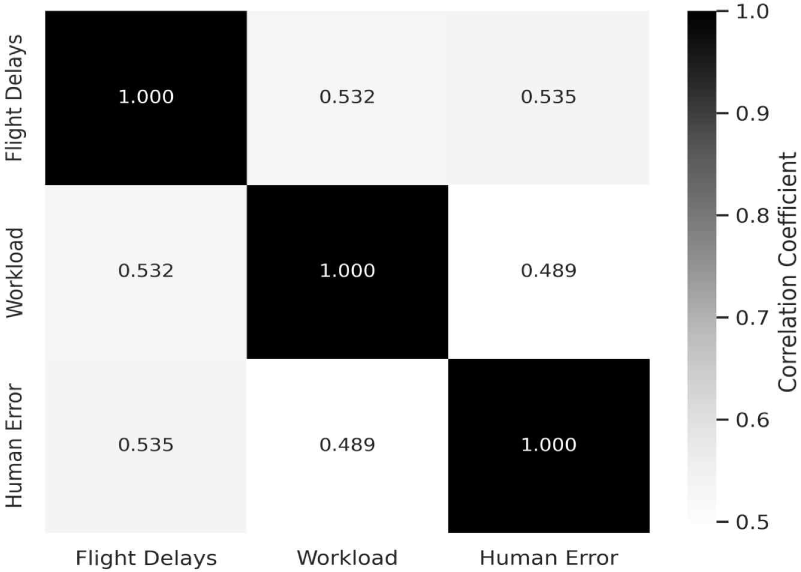
Pearson’s correlation analysis was conducted to examine the relationships among flight delays, workload, and human error. Flight delays were significantly and positively correlated with workload (r=0.532, p<0.01) and human error (r=0.535, p<0.01). Workload also showed a significant positive correlation with human error (r=0.489, p<0.01). These results indicate that all variables are positively and significantly associated.
Specifically, flight delays were associated with increased pilot workload (r=0.532), workload was positively related to human error (r=0.489), and delays were directly related to human error (r=0.535). Collectively, these findings support the hypothesized sequential pathway in which delays increase workload, which subsequently contributes to human error. A correlation matrix heatmap (Figure 2) illustrates the strength and direction of these associations, providing preliminary support for H1, H2, and H3.
Regression results indicated that flight delays significantly increased pilot workload (F= 70.707, p<0.001), explaining 53.2% of the variance (R2=0.532). The Durbin–Watson statistic (2.087) suggested no autocorrelation. Both coefficients were positive and significant (B=0.569; β=0.532, t=7.98, p<0.001), thereby providing support for H1.
Workload was a significant predictor of human error (F=56.129, p<0.001; R2=0.489). The Durbin–Watson statistic (1.805) indicated independence of residuals. Coefficients were positive and significant (B=0.612; β=0.489, t=10.21, p<0.001), thereby providing support for H2.
Workload was a significant predictor of human error (F=56.129, p<0.001; R2=0.489). The Durbin–Watson statistic (1.805) indicated independence of residuals. Coefficients were positive and significant (B=0.612; β=0.489, t= 10.21, p<0.001), thereby providing support for H2.
The PROCESS Macro (Model 4, v4.2; 5,000 bootstraps) confirmed a significant indirect effect of delays on human error via workload. Flight delays significantly predicted workload (B=0.332, t=5.269, p<0.001), and workload was a significant predictor of human error (B=0.389, t=7.491, p<0.001). The direct effect of delays on human error remained significant (B=0.269, t=5.346, p<0.001). The indirect effect was significant (B=0.129, 95% CI [0.082, 0.181]). These results confirm H3: workload partially mediates the delay–error relationship.
H1. (Delays → Workload): Supported
(β=0.532, p<0.001; R2=0.532).
H2. (Workload → Human Error): Supported
(β=0.489, p<0.001; R2=0.489).
H3. (Delays → Workload → Human Error): Supported (Indirect effect B=0.129, 95% CI [0.082, 0.181]).
All three hypotheses were supported. Findings reveal a clear mechanism: flight delays elevate workload, which increases the risk of human error, while delays also exert a direct effect.
Independent t-tests and one-way ANOVAs showed no significant demographic differences (gender, age, career length, total flight hours, rank) for workload or human error (all p>0.05) as indicated in Table 2. This suggests delay-induced workload and safety risks are uniformly perceived across pilot subgroups, thereby reinforcing the robustness of the findings.
| Variable | Workload (p-value) | Human error (p-value) |
|---|---|---|
| Gender | 0.432 | 0.919 |
| Age | 0.618 | 0.919 |
| Career length | 0.391 | 0.324 |
| Total flight hours | 0.542 | 0.074 |
| Rank | 0.258 | 0.208 |
Ⅳ. Discussion
This study empirically demonstrates that flight delays in domestic low-cost carrier (LCC) operations significantly increase pilot workload, which is strongly associated with a greater risk of human error. Mediation analysis confirmed that workload partially mediates the relationship between delays and human error, thereby reinforcing prior human factors research. Regression results supported H1 and H2, while the mediation test (H3) highlighted workload as a critical mechanism linking delays to the occurrence of error. Overall, delays not only disrupt operational efficiency but also pose safety risks by escalating cognitive and psychological burdens. The study extends previous literature by validating workload as a mediating pathway in real-world LCC operations, addressing a gap where most prior studies were conceptual or simulator-based.
The findings carry important implications for both airlines and regulators. Airlines should adopt flexible crew scheduling, provide real-time delay information, ensure rest facilities during extended delays, and implement contingency plans proactively. Regulators should establish safeguards such as mandatory pilot rest facilities, minimum turnaround standards, and fatigue risk management frameworks that explicitly address delay-induced workload.
The key policy measures recommended are as follows :
-
✓ Delay Forecast Integration – Use predictive analytics to anticipate and mitigate workload surges.
-
✓ Crew Resource Optimization – Actively utilize standby crew to limit excessive duty times.
-
✓ Regulatory Safeguards – Institutionalize workload assessment in delay management and count airport waiting time toward both duty and fatigue hours, consistent with ICAO Annex 6.
-
✓ Fatigue Mitigation – Mandate proper rest facilities and rest protections, explicitly covering cumulative workload from repeated delays.
Several limitations should be acknowledged: (i) the cross-sectional design limits causal inference; (ii) reliance on self-reports may introduce bias; and (iii) the focus on Korean domestic LCCs may limit generalizability.
Future studies should employ longitudinal designs and objective measures (e.g., simulator data, physiological indicators) to capture delay-induced workload more accurately. Comparative research across LCCs and FSCs, as well as broader regional contexts, would enhance the understanding. Expanding the scope to include other crew groups (e.g., cabin crew, dispatchers) could also provide a more holistic view. Given shared operational features such as tight scheduling and high utilization, the findings are likely to hold broader relevance across global LCC markets.
Ⅴ. Conclusion
This study provides empirical evidence that flight delays in domestic low-cost carrier (LCC) operations represent not only a disruption of schedule efficiency but also a structural safety risk. Using survey data from 181 LCC pilots in Korea, the results confirmed three key findings: (1) flight delays significantly increase pilot workload; (2) higher workload levels are strongly associated with human error; and (3) workload partially mediates the delay–error relationship. These findings reinforce human factors theory by identifying workload as a critical mechanism linking operational disruptions to safety outcomes.
The study contributes to the aviation safety literature by reframing delay management as a core element of Safety Management Systems (SMS), rather than solely a customer service concern. For airlines, the results highlight the need for predictive delay analysis, flexible crew scheduling, real-time information sharing, and contingency planning. For regulators, the findings underscore the importance of institutional safeguards, including mandated rest facilities, delay-adjusted duty hour accounting, and expanded fatigue risk management frameworks. Several limitations should be acknowledged, including the reliance on self-reported survey data, a cross-sectional design, and a focus on domestic LCC pilots. Future research should adopt longitudinal methods, integrate objective performance measures, and extend analyses to international operations, full-service carriers, and other crew groups such as cabin crew.
In conclusion, addressing delay-induced workload is essential to safeguarding flight safety and enhancing resilience in airline operations. By recognizing workload as a mediating factor in the delay–error relationship, both industry and policymakers can implement targeted interventions to reduce human error and strengthen the overall safety culture of aviation.

