
 PDF Download
 PubReader
 Export Citation
 Email the Author
 Share Facebook
 Share Twitter
 Cited by 0 Article
 Metrics (View:1,431)






I. Introduction
The UN Sustainable Development Goals (SDGs) present 17 integrated development goals aimed at resolving global social, economic, and environmental challenges by 2030. Among these, SDG 4 (quality education) and SDG 8 (decent work and economic growth) explicitly emphasize strengthening human capacity through technical and vocational education as a core means for sustainable development (UN, 2015; UNESCO, 2022; UNDP, 2025; UN DESA, 2025). In this context, the United Nations and the International Civil Aviation Organization (ICAO) define sustainable air transport as essential infrastructure supporting SDG achievement. They assess that aviation structurally contributes to improving access to education and creating quality jobs by strengthening inter-country connectivity and promoting trade, tourism, and employment (ICAO, 2016; ICAO, 2017). Furthermore, the Air Transport Action Group (ATAG) and the International Air Transport Association (IATA) report that the aviation industry makes substantial contributions to achieving SDG 4 and SDG 8 by supporting international mobility for education and training, and by generating significant employment and value-added(ATAG, 2022; ATAG, 2022; IATA/ATAG, 2022). This suggests that education, training, and human capacity development in aviation are key components in realizing the sustainable development envisioned by the SDGs.
The aviation industry is classified as a representative high-reliability industry (HRI), requiring the simultaneous maintenance of extreme safety and service quality. It has been consistently emphasized that systematic training and adherence to standardized procedures are essential to minimize human error (Balcerzak, 2018; Marron and McFadyen, 2024). Prior research on high-risk industries demonstrates that simulation-based practice and repetitive training are key factors in enhancing on-site response capabilities. Within aviation, numerous studies have reported that simulated flight and cabin scenario training are directly linked to safety (Merchant et al., 2014; Radianti et al., 2020). In this context, international and domestic regulations impose mandatory cabin crew training obligations on air carriers. By categorizing cabin crew training into initial, recurrent, and re-qualification training and establishing these as legal requirements, they clearly define systematic practical training as an essential institutional element (ICAO, 2020; National Fire Agency, 2024).
Recent airline accident cases empirically highlight the importance of such training. Analysis of the 2024 Japan Airlines collision and fire accident at Haneda Airport in Japan indicated that hundreds of passengers were able to evacuate swiftly based on the emergency response procedures and evacuation drills the crew had repeatedly trained on (JTSB, 2024; Reuters, 2024). Conversely, incidents like the forced opening of an emergency exit during landing reveal the limitations of standardized safety briefings and lecture-based training alone in adequately responding to unpredictable passenger actions or complex security threats (National Fire Agency, 2024). Consequently, aviation safety training research emphasizes the need for practical training environments that go beyond mere manual memorization. These environments allow realistic exposure to diverse abnormal situations and practice immediate decision-making and actions (Merchant et al., 2014; ICAO, 2020).
From a sustainability perspective, cabin crew safety training is considered a crucial element constituting human sustainability. It serves as a key means to protect an airline’s human capital and prevent accidents, fatalities, and financial losses caused by human error (ICAO, 2020; Ochs et al., 2022). Previous studies analyzing airline sustainability reports have pointed out that airlines are being called upon to report not only on environmental indicators like carbon emissions or fuel efficiency, but also on social sustainability aspects such as safety, human resource development, and stakeholder protection. In this process, the level of investment in safety culture and education/training is highlighted as a key evaluation item (Karaman et al., 2018; Elkington, 2018). This suggests that sustainability in the aviation industry is expanding beyond mere environmental performance to encompass a comprehensive concept that includes the social responsibility of preventing accidents through crew training and protecting passenger lives and trust (Karaman et al., 2018; ATAG, 2022).
Against this backdrop, as a digital transformation strategy to implement this human and social sustainability in educational settings, the aviation and transportation sectors are now actively discussing the introduction of virtual reality (VR) and metaverse-based training (Marron and McFadyen, 2024; Radianti et al., 2020). VR is evaluated as a key technology for enhancing the effectiveness of safety education and simulation training because it enables repetitive training without physical risk while realistically reproducing high-risk situations through immersive 3D environments (Steuer, 1992; Slater and Wilbur, 1997). Research in higher education and vocational training indicates that immersive VR enhances learners’ presence, promotes their sense of control and active engagement through interactivity, and thereby increases enjoyment and learning motivation (Merchant et al., 2014; Makransky and Lilleholt, 2018; Makransky and Mayer, 2022). These experiential factors, in turn, appear to lead to learning outcomes across cognitive, affective, and behavioral dimensions (Pekrun, 2006; Huang et al., 2010; Schrader and Bastiaens, 2012).
In aviation and safety fields, VR is also utilized as an educational tool to enhance risk perception and response behaviors by enabling repeated experiences of complex emergency scenarios (Radianti et al., 2020; Marron and McFadyen, 2024). Case studies in safety training report that realistic scenarios and interactive tasks provided in VR environments enhance learners’ presence and emotional immersion, thereby improving their ability to perform emergency procedures and their situational awareness (Slater et al., 2006; Hartmann et al., 2016).
From environmental and economic perspectives, VR and digital simulation hold the potential to reduce resource consumption and carbon emissions compared to physical mock-up construction and maintenance, facility energy usage, and field training involving long-distance travel (Marron and McFadyen, 2024; PropVR, 2024). Case studies analyzing the use of digital VR in aircraft cabin design and training demonstrate that reducing the number of physical prototypes and transferring design and validation processes to virtual environments can decrease material usage, energy consumption, and operational emissions (DLR, 2024; PropVR, 2024). These findings suggest that VR-based training can serve as a means to enhance the environmental sustainability of aviation education systems from the perspectives of SDG 12 (Responsible Consumption and Production) and SDG 13 (Climate Action) (UN SDG:Learn, 2019; ATAG, 2022).
However, VR technology also has limitations and challenges. Previous studies on VR-based training report that cybersickness, visual fatigue, and discomfort experienced by some learners during prolonged use can negatively impact the learning experience and outcomes (Cobb et al., 1999; Stanney et al., 2020). Furthermore, at the current technological stage, it is difficult to perfectly replicate tactile and sensory feedback, such as the physical resistance felt when opening an actual emergency exit or changes in cabin pressure and temperature. Consequently, it has been pointed out that VR cannot fully replace physical mock-ups in certain practical training areas (Marron and McFadyen, 2024; DLR, 2024). Nevertheless, prior studies emphasize that VR can function as a “complementary core infrastructure” capable of alleviating the cost, time, and environmental burdens of traditional mock-up-centered training. It enhances the sustainability of the entire training system by recreating extreme emergency scenarios that are difficult to expose learners to (Radianti et al., 2020; ICAO, 2020; PropVR, 2024).
In terms of research trends, existing aviation-related studies have primarily focused on operational performance metrics such as service quality, customer satisfaction, and safety management systems, with relatively fewer studies analyzing the training environment and training design itself (Thomas et al., 2023; National Fire Agency, 2024). VR education research has also concentrated on discussions about technological implementation, content design, and factors influencing usage intent and adoption. Empirical studies analyzing the structural relationship through which specific VR features connect to learning outcomes via learners’ psychological experiences remain limited (Buttussi and Chittaro, 2020; Fussell and Truong, 2020). Specifically, studies verifying the impact of presence and interactivity in interactive VR environments on learning outcomes and transfer of training, mediated by experiential variables such as enjoyment, have been largely confined to certain education and gaming fields. Research targeting specialized practical environments, such as airline cabin service, has been scarcely reported (Jensen and Konradsen, 2018; Yang et al., 2023).
Building on the above discussion, this study, grounded in the problem awareness of exploring sustainable development pathways for aviation service education from an SDGs perspective, aims to empirically clarify the structural relationship through which VR features in the aviation service education context lead to learning outcomes via learner experience factors (Presence, Control & Active Engagement, Enjoyment). Specifically, first, it analyzes the impact of VR’s functional characteristics on learners’ presence, sense of control and active engagement, and enjoyment within aviation service education environments (Makransky and Lilleholt, 2018; Makransky and Mayer, 2022). Second, it seeks to theoretically refine the operational structure of VR-based immersive learning by verifying the mechanisms through which these experiential factors translate into cognitive, affective, and behavioral learning outcomes using a structural equation model (Pekrun, 2006; Schrader and Bastiaens, 2012). Third, based on the analysis results, we propose key experiential variables and utilization strategies for designing and operating VR as a sustainable educational infrastructure that complements existing model-based training in aviation service education settings. We further discuss how a digital-based education model, which mitigates dependence on expensive physical infrastructure while maintaining and enhancing safety and learning outcomes, can contribute to the human and environmental sustainability of the aviation industry (Karaman et al., 2018; ICAO, 2020; PropVR, 2024).
Meanwhile, this study focuses less on quantitatively measuring sustainability through direct environmental and economic indicators (e.g., carbon emissions, energy consumption, cost savings) and more on exploring the theoretical and practical implications of VR-based training in aviation workforce development for the sustainability of human and educational infrastructure through learning experiences and outcomes.
This study analyzes VR-based practical training for university students and graduates majoring in aviation services. It applies confirmatory factor analysis and structural equation modeling (SEM) to quantitative data collected via surveys to validate the research model and hypotheses. This analytical procedure was designed to align with learning outcomes-based design principles (Biggs and Tang, 2011) and the criteria for utilizing structural equation modeling proposed in educational research (Kline, 2016). Furthermore, this study aims to empirically demonstrate the effectiveness and operational mechanisms of VR-based education in the aviation service training field. By doing so, it seeks to provide academic and practical grounds for concretizing the sustainable aviation workforce development model demanded by prior research emphasizing aviation industry sustainability and human capital (Karaman, Kilic and Uyar, 2018) and the International Aviation Industry Report (ATAG, 2022).
Finally, this paper is structured as follows. Chapter 2 reviews prior research on VR’s functional characteristics, experiential factors, learning outcomes, and sustainability, and presents the research model and hypotheses. Chapter 3 describes the research design, sample, and analytical methods. Chapter 4 presents the empirical analysis results. Chapter 5 discusses theoretical and practical implications based on the findings, along with the study’s limitations and directions for future research.
In summary, this study simultaneously verifies the structural relationship through which VR features lead to learning outcomes via learner experience factors (presence, control and active engagement, and enjoyment) within an interactive VR environment, specifically in the context of aviation cabin safety and service training. Furthermore, it aims to present a new perspective that bridges existing VR education research and aviation sustainability research by being the first empirical study directly linked to discussions on human, social, and environmental sustainability in the aviation industry and SDGs (4, 8, 12, 13).
II. Literature Review
Definitions of the functional characteristics of virtual reality (VR) have been discussed from two perspectives: technical mechanisms and user experience (Steuer, 1992; Slater and Wilbur, 1997). Slater and Wilbur defined VR as “a technology that enables users to become immersed in a digitally generated environment and perceive it as if they were physically present in that space” (Slater and Wilbur, 1997). This definition subsequently formed the conceptual foundation for VR research (Slater and Wilbur, 1997). In this study, VR Features are defined as the functional attributes provided by a virtual reality learning environment that enable immersion, interactivity, system responsiveness, learner control, and active engagement (Steuer, 1992; Radianti et al., 2020). Steuer defined the essential characteristics of VR as the combination of immersion and interactivity, explaining that “an environment that responds immediately to the user's actions enhances the sense of presence” (Steuer, 1992). This emphasizes that the core of the learning experience lies in the iterative process of immediate feedback between the user's intent and the environment, going beyond simple screen-based interaction.In addition, like cabin service training, in practice-based industrial education fields, realistic simulation-a key functional characteristic of VR-guides learners to perceive the virtual environment not merely as a visual medium but as an "actual experiential space." This shift in perception promotes learner immersion (Merchant et al., 2014).
In addition, these VR features are evaluated as key technological elements contributing to the economic and environmental sustainability of aviation education systems by enabling digital training infrastructure that reduces dependence on physical model training labs and decreases resource and energy consumption (Balcerzak, 2018; Karaman et al., 2018.)
Earlier studies have empirically demonstrated that the VR features consistently exert a positive influence on learners' sense of presence. Radianti et al.(2020) conducted a comprehensive review of 43 VR-based learning studies in higher education, revealing that the functional characteristics of immersive VR consistently tend to enhance learners' sense of presence (Radianti et al., 2020).
This suggests that VR is not merely a technology but a key factor determining the quality of the learning experience. Wirth et al. reported that specific functional elements of VR, such as “perspective design, spatial interaction, and system responsiveness,” significantly enhance learners' sense of presence. These findings were confirmed across diverse higher education fields, including science, medicine, and engineering (Wirth et al., 2007; Radianti et al., 2020). Furthermore, in the context of emergency response training, Kober et al.(2012) reported that “realistic environmental design and interactive scenarios” in VR training simulating fire evacuation situations increased learners' presence (Kober et al., 2012). These findings support the importance of immersive training for real emergency situations, given the nature of aviation service education. In the field of safety education, Makransky and Mayer proposed that “the multisensory immersive experience provided by VR induces a higher level of presence compared to traditional training methods.” They further stated that this aligns with neuroscientific evidence showing that combining multisensory stimuli (visual, auditory, tactile) activates the learner's nervous system and promotes event memory formation (Makransky and Mayer, 2022). Furthermore, a high level of presence that enables safe, repeated exposure to high-risk situations is also discussed as a means of human sustainability that can contribute to reducing actual accident rates and strengthening safety culture (Karaman et al., 2018; Talley and Howard, 2025).
Learners' sense of control and active engagement are core elements emphasized in constructivist learning theory. Empirical evidence has accumulated on how the interactivity and manipulability of VR environments enhance these elements. As proposed in Steuer's early research, the principle that “a structure allowing users to intervene in the environment and immediately observe consequences” promotes learners' active engagement has been reconfirmed in numerous subsequent studies (Steuer, 1992). Wirth et al. reported that the “manipulative freedom and immediate feedback” provided in VR environments enhance learners' active exploration and perceived control over learning (Wirth et al., 2007). Research in vocational education contexts demonstrates that these effects are even more pronounced. Merchant et al. reported that “VR-based learning significantly enhances learners' perceived control and learning engagement” in vocational education settings (Merchant et al., 2014). Chittaro and Ranon suggested in their VR learning environment study that “environmental designs enabling learners to perform tasks independently promote self-directed learning behaviors” (Chittaro and Ranon, 2007). In Groenestijn et al.'s study on embodied interaction, they reported that “VR environments supporting physical and cognitive interaction increase learners’ active learning behaviors” (Groenestijn et al., 2016). This suggests that learners' physical movements (e.g., cabin navigation, safety equipment operation) could be a crucial mechanism linking to learning outcomes in the aviation service training context. Furthermore, self-directed learning experiences based on high perceived control and active engagement are presented as a key factor in enhancing the human sustainability of aviation workforce development by promoting long-term job competency development and career continuity (Talley and Howard, 2025; Ochs et al., 2022).
In educational psychology research examining the roles of learning motivation and emotion, enjoyment is recognized as a key emotional variable that enhances learners' sustained engagement and learning effectiveness (Pekrun, 2006). The relationship between the immersive experience provided by VR-based learning environments and enjoyment has been elucidated through the following prior studies. According to Makransky and Mayer's review, immersive experiences in VR-based learning environments function as “a key factor enhancing learners' enjoyment and positive emotions” (Makransky and Mayer, 2022). This can be interpreted as a psychological mechanism that deepens immersion in learning, going beyond a simple increase in positive affect. Through their analysis, de Freitas and Oliver explained that “presence in VR environments influences the learning experience by mediating learner enjoyment” (de Freitas and Oliver, 2006). Merchant et al. reported in their safety education study that “multisensory VR environments and gamification elements significantly enhance learners' interest and enjoyment” (Merchant et al., 2014). Makransky and Mayer presented that “immersive VR learning consistently improves learners' enjoyment and learning motivation compared to traditional educational methods” (Makransky and Mayer, 2022). Lucardie emphasized that in adult learning contexts, “realistic VR environments are factors that sustain learners' emotional engagement and enjoyment” (Lucardie, 2014). This enjoyment-based sustained engagement can reduce dropout rates and support long-term competency development in fields requiring repetitive learning, such as aviation services. Consequently, it contributes to human sustainability in terms of talent retention and organizational human capital management (Karaman et al., 2018; Talley and Howard, 2025).
The impact of presence on learning outcomes has been explained based on cognitive load theory and attention theory. Slater and Wilbur proposed that high presence “focuses learners' attention on learning tasks, enhancing cognitive processing efficiency” (Slater and Wilbur, 1997). Schrader and Bastiaens also reported that presence “enhances learners' task immersion and improves cognitive processing levels” (Schrader and Bastiaens, 2012). Slater et al., who directly measured learning performance improvements in VR environments, reported that “in VR environments inducing high presence, learners' comprehension and performance levels significantly improve” (Slater et al., 2006). Hartmann et al. further proposed in the field of affective learning that “presence exerts a particularly strong influence on affective learning outcomes such as empathy and attitude change” (Hartmann et al., 2016). In aviation safety and service training, presence can be understood as a mechanism that promotes the transfer of safety behaviors and customer response capabilities by more realistically reproducing actual emergency situations or service interactions. This ultimately enhances on-site safety and service quality, thereby strengthening the social sustainability of the aviation industry (Karaman et al., 2018; ATAG, 2022).
Constructivist learning theory and self-determination theory emphasize the positive impact of learners' active engagement and experiences of autonomy on learning outcomes (Ryan and Deci, 2000; Hmelo-Silver, 2004). Makransky and Lilleholt reported in VR learning research that “the sense of control and active behavior experienced by learners simultaneously enhance learning satisfaction and learning effectiveness” (Makransky and Lilleholt, 2018). Hmelo-Silver, grounded in cognitive learning theory, stated that “proactive exploration and manipulation experiences are significantly associated with cognitive learning outcomes” (Hmelo-Silver, 2004). Parong and Mayer, in their cognitive design study, explained that “the more learners actively engage in task performance and experience immediate feedback, the greater the improvement in knowledge transfer and performance outcomes” (Parong and Mayer, 2018). In aviation service education, Control & Active experiences can contribute to enhancing on-site judgment and response capabilities by enabling active practice of complex emergency procedures and service situations. This suggests a potential link to strengthening human sustainability and organizational safety culture, as discussed in prior research (Ochs et al., 2022; Talley and Howard, 2025).
In emotion research within educational psychology, enjoyment is classified as a representative positive emotion that promotes learners' utilization of cognitive resources and learning persistence (Pekrun, 2006; Pekrun et al., 2007). Pekrun's control-value theory explains that positive emotions related to learning enhance attention to learning and strategic learning (Pekrun, 2006). Linnenbrink-Garcia et al. stated that “enjoyment significantly predicts learning outcomes” in the context of self-regulated learning (Linnenbrink-Garcia et al., 2016). Lucardie's meta-analysis study explained that “in adult learning contexts, enjoyment is a key factor enhancing learning engagement and learning effectiveness” (Lucardie, 2014). Ke reported in the field of game-based learning that “enjoyment is closely associated with training outcomes” (Ke, 2008). Pekrun and Linnenbrink-Garcia presented in achievement emotions research that “enjoyment positively influences learning achievement and intention to participate” (Pekrun and Linnenbrink-Garcia, 2014). In aviation service education, the enjoyment and interest provided by VR environments can mitigate fatigue from repetitive training and increase the intention to continue learning. In the long term, this contributes to improved training completion rates, skill proficiency, and talent retention, functioning as an emotional resource that supports the human sustainability of aviation workforce development systems (Karaman et al., 2018; Talley and Howard, 2025).
Learning Outcomes are conceptualized as cognitive, affective, and behavioral changes manifested in learners following an educational experience. Biggs and Tang defined learning outcomes as “clear, measurable states that learners should attain through an educational program” (Biggs and Tang, 2011). In the context of aviation service education, these learning outcomes extend beyond mere knowledge acquisition to include behavioral competencies such as adherence to safety procedures, emergency response capabilities, and service attitudes. These competencies serve as critical indicators of an airline's safety and service quality and can be considered one of the key factors evaluated when assessing the social sustainability of the industry as a whole (Karaman et al., 2018; ATAG, 2022).
Based on the preceding literature review, this study establishes the following research hypotheses.
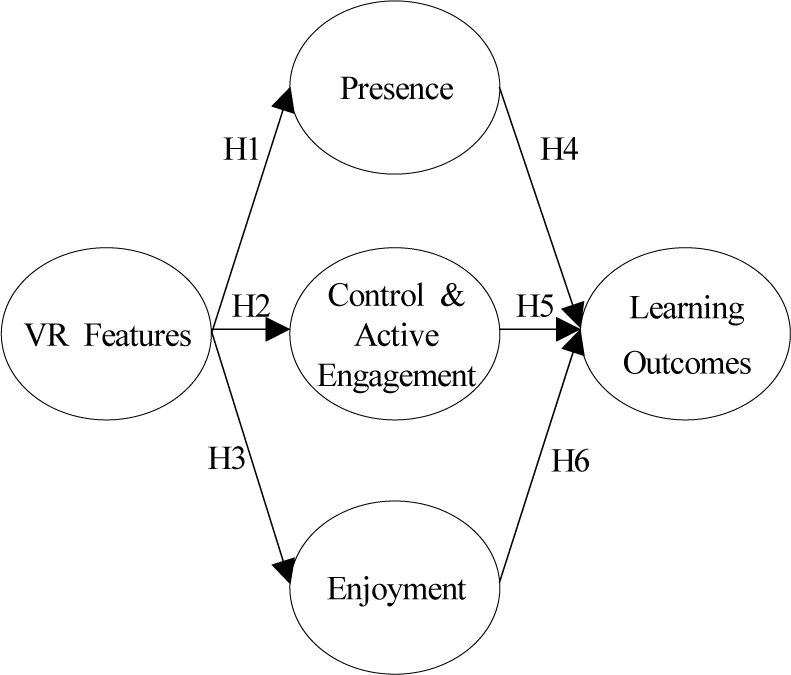
H1: VR Features will have a significant positive effect on Presence.
H2: VR Features will have a significant positive effect on Control & Active Engagement.
H3: VR Features will have a significant positive effect on Enjoyment.
H4: Presence will have a significant positive effect on Learning Outcomes.
H5: Control & Active Engagement will have a significant positive effect on Learning Outcomes.
H6: Enjoyment will have a significant positive effect on Learning Outcomes.
III. Methodology
This study established its research design based on the research model presented in Fig. 1 and applied quantitative survey methods, developing a total of 19 survey questions, summarized in Table 1. The survey questions were developed by creating measurement items for each variable based on prior research from various existing fields. The developed survey items were then refined to align with the objectives of this study and were designed to be answered using a 5-point Likert scale. Prior to the main survey, a pilot test was conducted with 15 aviation industry trainees to ensure the readability and clarity of the survey items; based on the feedback, the items were polished before proceeding with the main survey.
| Variables | Number | Questionnaires | References |
|---|---|---|---|
| VR features | VF1 | The realism of the 3D images motivates me to learn. | Dalgarno et al. (2002) |
| VF2 | The smooth changes of images make learning more motivating and interesting. | ||
| VF3 | The realism of the 3D images helps to enhance my understanding. | ||
| VF4 | The ability to change the view position on the 3D objects allows me to learn better. | ||
| Presence | PR1 | My interaction with the simulation environment seemed natural. | Sutcliffe et al. (2005) |
| PR2 | My experiences in the virtual environment seemed consistent with real world experiences. | ||
| PR3 | I was engaged in the virtual environment experience. | ||
| PR4 | I was involved in the experimental task to the extent that I lost track of time. | ||
| Control & active engagement | CA1 | This type of virtual reality program helps me to have a better overview of the content learned. | Lee et al. (2010) |
| CA2 | This type of virtual reality program allows me to be more responsive and active in the learning process. | ||
| CA3 | This type of virtual reality program allows me to have more control over my own learning. | ||
| CA4 | This type of virtual reality program helps to get me engaged in the learning activity. | ||
| Enjoyment | EN1 | I find using computer simulations enjoyable. | Tokel & Isler (2015) |
| EN2 | Using computer simulations is pleasant. | ||
| EN3 | I have fun using computer simulations. | ||
| Learning outcome | LO1 | I learned a lot of factual information in the topics. | Benbunan-Fich et al. (2003), Marks et al. (2005), Martens et al. (2007) |
| LO2 | I gained a good understanding of the basic concepts of the materials. | ||
| LO3 | I learned to identify the main and important issues of the topics. | ||
| LO4 | I was interested and stimulated to learn more. |
Sample extraction employed convenience sampling, a non-probabilistic method based on voluntary participation. The survey was administered via Google Survey Form to university students and graduates majoring in aviation services, and the final analysis was performed based on a total of 289 completed responses.
Data were collected using a Google Survey Form targeting university students and graduates majoring in aviation services, resulting in a final sample of 289 valid responses. Data analysis was conducted using SPSS version 30.0, performing various basic statistical analyses, including descriptive statistics and internal reliability analysis. Subsequently, to test the hypotheses established in this study, confirmatory factor analysis (CFA) was performed using AMOS 30.0. This process included examining convergent validity, discriminant validity, and model fit, as well as conducting path analysis through structural equation modeling (SEM).
Furthermore, correlation analysis was performed to check for multicollinearity among the independent variables and was used as a preliminary verification procedure to ensure the suitability of the SEM analysis. All structural equation modeling analyses were conducted using AMOS 30.0.
IV. Results
Table 2 presents the demographic characteristics of the 289 respondents. The gender distribution was 90.0% female and 10.0% male, indicating an overwhelmingly high proportion of female respondents. This is likely due to occupational characteristics and industry workforce composition, which reflect a significantly higher proportion of female students majoring in Cabin Service Management. This pattern can be interpreted as the combined result of preferences for aviation cabin service roles, traditional career choice tendencies, and the gender ratio structure within educational institutions. Therefore, the 90% female respondent rate in this study is not considered indicative of sample bias; rather, it is thought to contribute to the reliability and validity of this research by demonstrating close alignment with the actual composition of students majoring in Cabin Service Management.
The largest age group was 21-23 years old at 66.4%, followed by 18-20 years old at 19.4%, 24-26 years old at 13.1%, and 27 years old and above at 1.0%. Regarding educational background, the largest number of respondents were currently enrolled in (or had dropped out of) their second year of university, accounting for 38.4%. This was followed by university/college graduates at 31.1%, those enrolled in (or having dropped out of) their first year of university at 16.6%, those enrolled in (or having dropped out of) their third year at 6.9%, high school students or graduates at 3.8%, and university seniors (or dropouts) at 3.1%.
The number of VR training sessions participants had attended was categorized into four groups. Among the 289 respondents, those with four or more sessions accounted for the highest proportion at 46.4%, followed by 19.4% who participated once, 18.7% twice, and 15.6% three times. This distribution indicates that VR-based training is being utilized within aviation service and flight operations curricula as a form of repetitive and cumulative learning. Notably, the fact that respondents who experienced VR training four times or more accounted for nearly half (46%) of the total suggests that a sustained, practice-based VR learning environment has been established, rather than VR being used merely as an experiential training tool. This can be interpreted as a result of subject matter characteristics where repetitive learning is crucial, such as aviation safety, cabin service procedures, and emergency response manuals, and it also serves as indirect evidence of the high educational utility of VR content.
Prior to hypothesis testing, this study examined the validity of the measurement model through confirmatory factor analysis (CFA). Analysis of the squared multiple correlation (SMC) values for each item revealed that all measurement items had SMC values ranging from 0.563 to 0.878, meeting the recommended threshold of 0.4. Therefore, the construct validity and explanatory power of the survey items used in this study were confirmed to be sufficiently established.
Furthermore, to confirm internal consistency, Cronbach's α was computed. The results ranged from 0.876 to 0.938 for all variables—VR Features, Presence, Control & Active Engagement, Enjoyment, and Learning Outcomes—exceeding the benchmark of 0.70. These results demonstrate that the survey items possess a high level of reliability and also meet the criteria necessary for assessing convergent validity. All relevant indicators (Cronbach’s α, SMC, Average Variance Extracted [AVE], and Construct Reliability [CR]) are summarized in Table 3.
The discriminant validity analysis results are shown in Table 4. The benchmark values of AVE≥0.5 and CR≥0.7 were satisfied. After confirming the reliability and validity of each construct, VR Features was found to sufficiently meet the criteria with CR=0.938 and AVE=0.791. Presence (CR=0.878, AVE=0.643), Control & Active Engagement (CR=0.915, AVE=0.729), Enjoyment (CR=0.938, AVE=0.835), and Learning Outcomes (CR=0.936, AVE=0.784) also exceeded the required levels.
| Constructs | A | B | C | D | E |
|---|---|---|---|---|---|
| VR features | 1 | ||||
| Presence | .854 | 1 | |||
| Control & active engagement | .876 | .938 | 1 | ||
| Enjoyment | .818 | .910 | .904 | 1 | |
| Learning outcome | .845 | .918 | .945 | .917 | 1 |
As presented in Table 5, various model fit indices were calculated to verify the suitability of the research model. The results showed that most fit indices met, or were very close to, the recommended criteria, thereby confirming the structural validity of the model.
| Division | Reselt | Recommendation or closer | Reference | |
|---|---|---|---|---|
| Absolute fit index | CMIN/df | 2.175 | 2≦χ2/df≦3 | Schermelleh-Engel (2003) |
| RMR | 0.018 | 0.05≦SRMR≦0.10 | ||
| GFI | 0.906 | 0.90≦GFI≦0.95 | ||
| AGFI | 0.864 | 0.85≦AGFI≦0.90 | ||
| RMSEA | 0.064 | 0.05≦RMSEA≦0.08 | ||
| Incremental fit index | NFI | 0.954 | 0.90≦NFI≦0.95 | |
| CFI | 0.974 | 0.95≦CFI≦0.97 | ||
Fig. 2 and Table 6 present a summary of the proposed research model for this study, including the path analysis results.
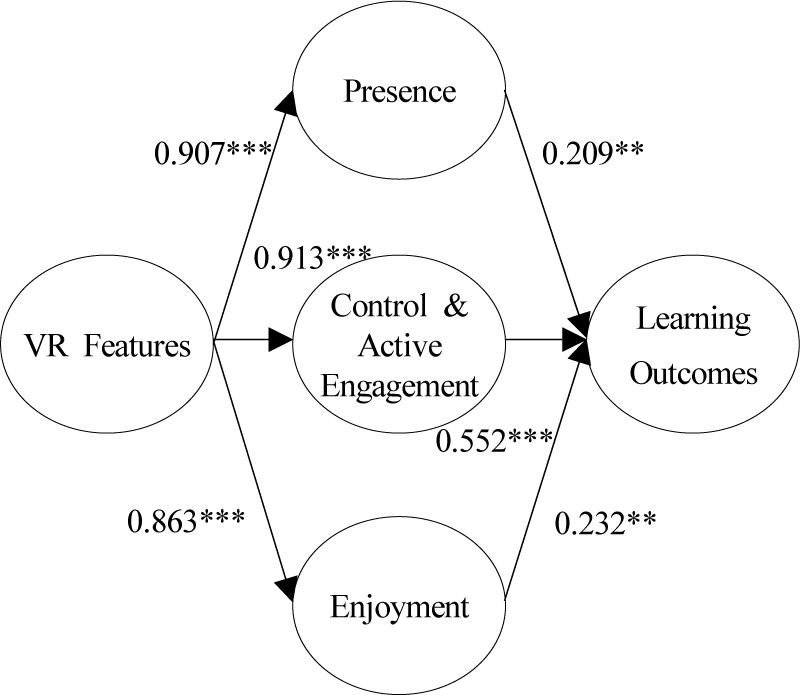
The path analysis results of the structural equation model (SEM) in this study revealed that VR Features exert a strong influence on learners' experiential factors. Specifically, VR Features had statistically significant effects on Presence (β=0.907, p<.001), Control & Active Engagement (β=0.913, p<.001), Enjoyment (β=0.863, p<.001), confirming the acceptance of hypotheses H1, H2, and H3. Furthermore, Learning Outcomes were significantly influenced by Presence (β=0.209, p=.005), Control & Active Engagement (β=0.552, p<.001), and Enjoyment (β=0.232, p=.005), supporting H4, H5, and H6.
These results indicate that H4 through H6 were also statistically supported, showing that each experiential factor positively influenced learning outcomes to varying degrees within the VR-based learning environment. The statistical analysis results of this study show that VR Features, the learning experiences conducted based on virtual reality, ultimately showed a significant positive relationship with the trainees' learning outcomes.
The analysis showed that Presence has a significant positive effect on learning outcomes (β=0.209, p<.05). This implies that the more learners perceive the VR environment as a “realistic experiential space” similar to an actual cabin situation, the more effectively they acquire safety procedures and service-related knowledge and skills. Furthermore, immersive learning experiences based on high levels of Presence hold the potential to enhance response capabilities in real emergency situations and service performance. This can serve as a foundation for strengthening the human and social sustainability of the aviation industry by reducing human error and protecting passengers.
Control & Active Engagement was also identified as the variable exerting the strongest influence on learning outcomes (β=0.552, p<.001). This suggests that the more learners actively manipulate situations and control their own learning process within the VR environment, the deeper their understanding and retention of the knowledge and procedures required for actual job performance. In the long term, such experiences of active control can enhance self-directed learning and job adaptability, supporting human sustainability—the ability to continuously update competencies even after training. They are also expected to mitigate workforce replacement costs and organizational operational risks by preventing safety incidents and maintaining service quality.
Enjoyment was likewise found to have a significant positive effect on learning outcomes (β=0.232, p<.01). The enjoyment and interest experienced in the VR learning environment function as emotional resources that support more stable learning achievement by increasing learners' willingness to engage with tasks and alleviating fatigue from repetitive learning. Particularly in contexts requiring repeated practice of identical procedures and scenarios, such as aviation service training, high Enjoyment reduces training dropout rates and promotes long-term competency development. This, in turn, enhances human sustainability by maintaining and strengthening human capital, while simultaneously contributing to optimized educational resource utilization through efficient digital training compared to physical practice.
Taken together, these results indicate that H4 through H6 are all statistically supported, showing that each experiential factor positively influences learning outcomes to varying degrees within VR-based learning environments. The statistical analysis results of this study confirm that VR Features significantly contribute to trainees' academic performance through learning experiences conducted in virtual reality.
V. Discussion and Conclusions
This study was conducted to empirically analyze the impact of education utilizing virtual reality (VR) in a practice-centered aviation service training environment on learners' experiences and learning outcomes, based on the premise that the aviation industry is a high-reliability industry (HRI) that demands both safety and service quality. Aviation service training necessitates high-level facilities, equipment, and safety management systems to fully replicate actual aircraft cabin environments. However, constructing and maintaining physical mock-ups involves substantial costs, resource consumption, and spatial constraints, which have been identified as factors threatening the long-term sustainability of training systems (Balcerzak, 2018). Against this backdrop, this study examined whether VR-based practical training can support human and environmental sustainability in aviation service education. To do this, we structurally analyzed the relationship between experiential factors, such as presence and enjoyment, and learning outcomes (Merchant et al., 2014; Yang et al., 2023).
Specifically, through empirical analysis targeting the students and graduates majoring in aviation services, this study examined the potential for VR to function as an alternative training environment that compensates for the limitations of existing lecture-based and model-centered educational programs. On this basis, it explored whether digital-based educational strategies can establish themselves as a sustainable development pathway for aviation service workforce training systems. This problem awareness aligns with recent discussions that aviation workforce education should contribute to protecting human capital and establishing resource-efficient training systems, going beyond simple technical training. This is particularly relevant to achieving the SDGs' goals of Quality Education (SDG 4), Decent Work and Economic Growth (SDG 8), Responsible Consumption and Production (SDG 12), and Climate Action (SDG 13) (ATAG, 2022; Karaman et al., 2018).
Structural equation modeling (SEM) analysis revealed that VR's functional characteristics (VR Features) exerted a significant positive influence on all core learner experience factors: presence, control/active engagement, and enjoyment. Specifically, VR Features strongly influenced Presence (β=0.907, p<.001), Control & Active Engagement (β=0.913, p<.001), and Enjoyment (β=0.863, p<.001). These three experiential factors were also found to significantly influence learning outcomes (β=0.209, 0.552, and 0.232, all p<.05). This pattern is consistent with existing research showing that the technical characteristics of immersive VR environments lead to learning outcomes through presence, interactivity, and emotional enjoyment (Radianti et al., 2020; Makransky and Lilleholt, 2018; Yang et al., 2023).
These results suggest that VR-based training environments have the potential to complement the limitations of traditional lecture- and model-centered education by providing realistic learning experiences, especially considering the constraints of aviation service training where repeated practice in actual aircraft cabins is difficult. In particular, the finding that learners form higher levels of immersion and self-directed learning experiences when actively participating in VR environments—moving independently and manipulating situations—compared to passively attending lectures aligns with the importance of active participation emphasized by constructivist learning theory and self-determination theory (de Jong and van Joolingen, 1998; Hmelo-Silver, 2004).
The findings of this study align with meta-analytic research showing that VR-based learning has a significant effect on improving learning outcomes compared to traditional educational methods (Merchant et al., 2014; Makransky and Mayer, 2022). They also exhibit the same pattern as the structural model results from Yang et al., which indicate that presence and enjoyment mediate learning outcomes (Yang et al., 2023). Furthermore, they correspond with the discussions by Radianti et al. and Schrader and Bastiaens, which suggest that viewpoint design, spatial interaction, and system responsiveness provided in VR environments enhance presence, thereby improving cognitive and affective learning outcomes (Radianti et al., 2020; Schrader and Bastiaens, 2012).
However, while previous studies primarily validated VR educational effects in technology-centric fields such as medicine, engineering, gaming, and military applications (Merchant et al., 2014; Radianti et al., 2020), this study holds significance by empirically clarifying the structural relationship between VR functionality, experiential factors, and learning outcomes in the specialized field of aviation services, which combines practical training and service delivery. Specifically, by validating within a single model the mechanisms through which presence, control and active engagement, and enjoyment lead to learning outcomes for aviation service majors, this study provides theoretical grounds for positioning VR as a “sustainable core educational infrastructure,” rather than simply as an “experiential device,” in aviation service education (Karaman et al., 2018; ICAO, 2020).
First, by validating the relationship between VR's functional characteristics, experiential factors, and learning outcomes using a structural equation model within the aviation service education context, this study extends the interactive VR learning mechanism proposed by Yang et al. (2023) into the service and safety education domains. While existing aviation service research has primarily focused on operational outcomes such as service quality, customer satisfaction, and safety management systems (Thomas et al., 2023; National Fire Agency, 2024), this study aims for academic expansion by presenting an integrated model that simultaneously considers both the design variables of the training environment itself (VR features) and the learner's psychological experience (Steuer, 1992; Makransky and Lilleholt, 2018; Makransky and Mayer, 2022; Pekrun, 2006).
Second, this study distinguishes itself from existing VR education research by examining aviation service training from the perspective of human and environmental sustainability. Similar to Karaman et al. (2018) and Talley and Howard (2025), who argue that aviation sustainability reporting and training must simultaneously consider protecting human capital and reducing environmental impacts, this study suggests that VR-based education can contribute not only to learning outcomes but also to building resource-efficient, low-carbon training systems, thereby integrating a sustainability framework into educational technology research.
Third, by comparing within a single model the differential influence of experiential factors (Presence, Control & Active Engagement, and Enjoyment) on learning outcomes, the study provides theoretical clues for prioritizing which experiential variables should be designed and managed in future aviation service education and similar service-industry training. This can be interpreted as applying and empirically validating, in the context of aviation service education, the discussions of Radianti et al. (2020) and Pekrun (2006), which emphasized the roles of presence and emotional enjoyment.
Aviation service education is practice-centered training directly linked to aviation safety. However, conducting repeated practice under conditions identical to actual flight operations or the cabin environment faces significant constraints in terms of cost, safety, and operations. The results of this study suggest that VR is an educational medium that mitigates these constraints while enhancing learners' presence, sense of control, and enjoyment, and that these factors are significantly linked to learning outcomes (Merchant, Goetz, Cifuentes, Keeney Kennicutt, and Davis, 2014; National Fire Agency, 2024). These findings indicate that aviation training institutions should strategically introduce and expand VR not merely as an experiential tool, but as a sustainable core educational infrastructure applicable in actual training and operational settings. Based on the empirical findings of this study, the following key practical implications are presented for designing and operating VR-based education in aviation service training environments and across the broader aviation industry's workforce development and training systems.
From the perspective of aviation safety, training institutions and airlines should utilize VR to enhance crew members' risk awareness and response capabilities by allowing them to repeatedly experience accidents and emergencies without physical risk. This study's findings suggest that when developing these modules, presence and control and active engagement must be set as core design variables to ensure learners perceive the virtual environment as a realistic experiential space. Specifically, content should faithfully reflect actual procedures—such as emergency equipment operation and evacuation paths—while incorporating interactive structures that allow learners to practice immediate decision-making. Such training serves as a strategic investment in human sustainability by reducing the likelihood of accidents caused by human error and is increasingly recognized as a core ESG indicator for airlines.
Regarding service training, VR-based immersive 3D environments should be designed to increase learner enjoyment and motivation, which function as emotional resources to reduce fatigue from repetitive practice of service scenarios. From a management standpoint, this digital-based training reduces dependence on physical mock-up labs, thereby lowering long-term education costs, energy consumption, and carbon emissions in alignment with SDGs 12 and 13. Therefore, instructors should integrate VR modules into existing curricula to facilitate repetitive service situation response practice while regularly providing feedback on experiential factors to enhance self-regulated learning capabilities.
This study has a few limitations. First, the sample was restricted to students and graduates majoring in airline service from several educational institutions in Korea that have introduced VR equipment. For this reason, it is important to remember that these findings may not be the same for current airline crews or learners in other countries. Second, as the analysis was based on cross-sectional survey data, it could not directly verify the long-term persistence of VR learning experiences on learning outcomes or the transfer of training results to actual job performance (Jensen and Konradsen, 2018). Third, while addressing sustainability, this study limited its analytical scope to presenting theoretical and practical implications for human and educational sustainability in aviation workforce development and educational infrastructure design. This was achieved by examining the relationship between VR functionality, experiential factors, and learning outcomes, rather than directly quantifying environmental and economic performance indicators such as carbon emissions, energy consumption, or cost savings. Therefore, as this study presents sustainability discussions at the educational psychology and educational technology level as a first step, quantitative evaluations of environmental performance and cost/resource efficiency remain tasks to be addressed in subsequent research.
Furthermore, as the data are based on a single-point self-report survey, the possibility of common method variance (CMV) cannot be entirely ruled out. Future research should strengthen procedural and statistical controls, such as combining survey and behavioral data, collecting time-lagged data, and designing marker variables.
Future research should collaborate with various aviation training institutions and airlines to track and verify the long-term impact of VR training experiences on safety behaviors, service quality, and accident/error rates in actual flight operations. Additionally, by looking at both human factors and environmental engineering to measure how VR training affects energy use and carbon emissions compared to real models, we can estimate the actual impact of this technology on the aviation industry's sustainability (Balcerzak, 2018; Karaman, Kilic, and Uyar, 2018). Finally, by studying students' feelings—such as anxiety and tiredness—through different research methods, future studies can clearly find the best conditions for VR training to help both people and the planet (Radianti, Majchrzak, Fromm, and Wohlgenannt, 2020; Stanney et al., 2020).


