
 PDF Download
 PubReader
 Export Citation
 Email the Author
 Share Facebook
 Share Twitter
 Cited by 0 Article
 Metrics (View:1,701)






I. Introduction
During the past few decades, the airline industry has encountered dynamic market conditions in air travel, encompassing factors such as war incidents, terrorism, increasing fuel costs, and global financial crises. Airlines have adapted to these challenges by engaging in strategic and sustainable activities such as M&A and organizational restructuring to survive and thrive.
In the Asia-Pacific region, a new wave of M&A activity began in 2001 with the strategic decision of merging Japan Airlines and Japan Air System (Arai, 2004). Subsequently, in 2002, nine major national airlines in China merged into three groups (Air China Group, China Eastern Group, and China Southern Group) with the aim of sustainable business success. Between 2008 and 2010, four major airlines in the U.S. were also merged into two groups, namely Delta-Northwest Airlines and UnitedContinental Airlines. European airlines followed suit, with Air France and KLM announcing their merger, and several other M&A activities between airlines were conducted for various strategic reasons (Airlines for America, 2009). Due to these strategic shifts in the airline industry, numerous airlines have recently undertaken measures to survive and maintain their operations in dynamic market environments through mergers and acquisitions.
According to many scholars, 44% of the companies involved in M&A failed to realize their intended objectives, and an overwhelming majority, approximately 70%, of these strategic actions are subsequently labeled as unsuccessful (Pablo, 1994; Peng, 2006). The success of a sustainable business operation through M&A heavily depends on the leadership ability of the acquiring firm to efficiently integrate the target company into its current organizational structure, promptly resolve any lingering issues, and mitigate potential cultural disparities that may arise post-acquisition (Carleton and Lineberry, 2004). The relationship between leadership and the performance of airline M&A can be highlighted through a successful M&A case of Southwest and Morris Air. Sharma & Thomas (2015) argue that proactive leadership in the M&A case between Southwest and Morris Air played a crucial role, resulting in positive M&A outcomes.
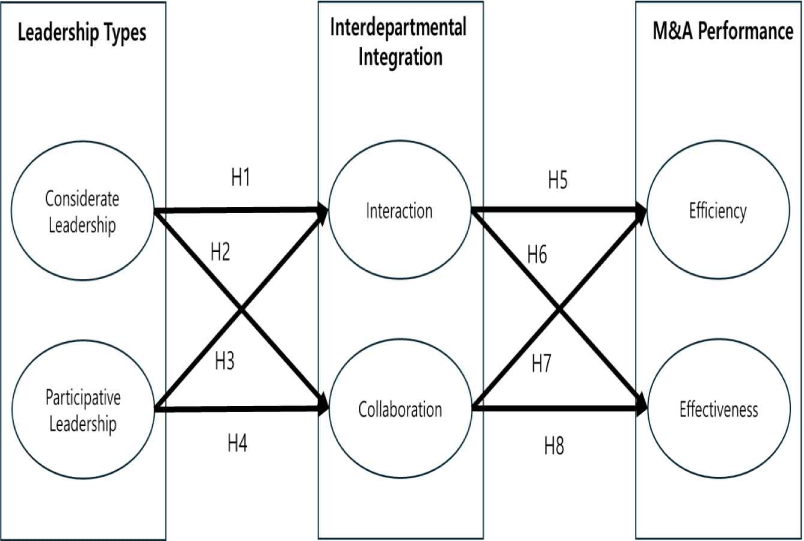
Previous research on airline M&A has primarily focused on operational aspects such as cost-effectiveness (Borenstein, 1990; Kim and Singal, 1993; Prager and Hannan, 1998; Kwoka and Shumilkina, 2010; Bilotkach, 2011) or economies of density resulting from airline mergers (Caves et al., 1984; Brueckner and Spiller, 1991). Additionally, studies have examined changes in airline alliances or the impact of airline size (Oum and Zhang, 2001; Goh and Yong, 2006; Merkert and Morrell, 2012). However, these studies have often overlooked the crucial role of leadership in the integration of two organizations during the M&A process, which is essential for achieving sustainable business operations. Despite efforts to identify relevant research on leadership and airline M&A, no studies have specifically examined the impact of different leadership styles on airline M&A performance through the mediation of interdepartmental integration. Therefore, this study aims to fill this gap by investigating how different leadership styles influence post-M&A performance through mediating variables such as interaction and collaboration, based on a current M&A case between two strong rival airlines in Korea. The theoretical contribution of this study lies in proposing and examining the relationship between leadership styles specifically considerate leadership and participative leadership and M&A performance through interdepartmental integration activities during the M&A process. This is a topic that has not been extensively explored in previous research on airline M&As. This study highlights how leadership styles can facilitate organizational integration, contributing to the success of post-M&A performance, particularly in the context of the airline industry. The decision to focus on considerate and participative leadership styles rather than other leadership styles was based on visibility, theoretical relevance, and demonstrated impact on interdepartmental integration within a firm, particularly during organizational change, where they play an especially influential role (Sarin and O'Connor, 2009). This relationship is illustrated in Figure 1.
In 2020, Korean Air and Asiana Airlines, two major rival full-service airlines in Korea, formally declared their intention to merge and become a single entity. The approval for this merger is currently pending from the competitor markets of the US, EU, UK, and Japan. Over the last three decades, Korean Air and Asiana Airlines have been formidable competitors in the Korean market. According to the Korea Civil Aviation Association (2020) and the annual reports of these two airlines (Hong et al., 2023), presented in Table 1, in 2019, Korean Air managed a fleet of 166 aircraft, covering a total of 101,108 million ASKs (available seat kilometers), 82,273 million RTKs (revenue tonne kilometers), and an average load factor of 81.3%. On the other hand, Asiana Airlines operated a fleet of 85 aircraft, with 56,332 million available seat kilometers (ASKs), 47,108 million revenue ton kilometers (RTKs), and an average L/F (Load Factor) of 83.6% in 2019. Regarding market share, Korean Air held 22.9% in the domestic market and 22.2% in international routes, while Asiana Airlines secured 19.3% in the domestic market and 15.3% in international routes.
| Index | Korean Air | Asiana Airlines |
|---|---|---|
| Fleet in service | 166 | 85 |
| ASKs (million) | 101,108 | 56,332 |
| RTKs (million) | 82,237 | 47,108 |
| Load factor (%) | 81.3 | 83.6 |
Considering the literature and the long-standing rivalry between Korean Air and Asiana Airlines in the Korean market, the following research questions were formulated. First, despite being strong rivals in the airline industry, do different styles of leadership possibly influence the results of cross-departmental integration during the M&A process? How do different leadership styles possibly influence interdepartmental integration within the two airlines, and how does this impact future M&A performance for the sustainability of business operations? This research aims to contribute to the airline industry by examining how different leadership styles will influence future M&A performance through the mediating variables of interaction and collaboration.
This research is structured as follows: Section 2 presents the relevant literature on M&A, leadership styles, interaction, and collaboration, focusing on interdepartmental integration and the future performance of M&A in terms of efficiency and effectiveness for business sustainability. Section 3 presents the research model, providing details on the methodology, including survey design, data analysis, and its results, as well as descriptive statistics, CFA (which includes quality of fit analysis), and SEM analysis. The results of each hypothesis are also presented. Finally, Section 4 offers an overall discussion of this research, along with implications for both academics and management.
II. Literature Review
M&A is a crucial strategic approach that corporations often utilize to expand their business operations in a sustainable manner. This approach leverages the effects of synergy and efficiency to achieve rapid growth and gain a competitive edge over rivals. One study has shown that mergers and acquisitions (M&A) in the airline industry boost efficiency by cutting costs and increasing market power through a reduction in the competitive landscape (Clougherty, 2002). Moreover, according to Merkert & Morrell (2012), airline mergers and acquisitions (M&A) create synergy and efficiency, acting as a transformative force through network and fleet optimization achieved by eliminating redundant services. This research suggests that airline M&A plays a crucial role in increasing the efficiency and effectiveness of airline business by aligning fleet and route schedules, as well as well-coordinated products and prices.
Sharma & Thomas (2015) assert that the proactive leadership approach in the merger between Southwest and Morris Air facilitated a remarkably smooth integration, ultimately resulting in the acquisition being celebrated as one of the most successful mergers in the history of the airline industry. This case exemplifies the vital importance of effective leadership in successfully navigating airline mergers and achieving positive, sustainable M&A outcomes. It showcases the profound impact of proactive senior leadership in ensuring seamless personnel integration and conflict resolution in such complex endeavors.
Transitioning from general M&A benefits to specific leadership factors, the interplay between leadership and organizational dynamics in the aviation service industry has been the subject of several studies. Kim Quy et al. (2023) conducted a study that explored the links between leadership and workplace spirituality in this sector and found that transformational leadership has a positive impact on fostering workplace spirituality in the aviation industry. In a previous study, Pusiran & King (2013) emphasized the crucial role of leadership in effectively managing organizations, specifically highlighting the significance of leadership styles within the airline industry. The research revealed that different styles of leadership have the potential to exert significant effects on managing airline organizations within the competitive business environment. Furthermore, Alafeshat & Tanova (2019) investigated the impact of leadership and high-performance work systems (HPWS) on organizational performance, employee satisfaction, and retention within the private airline industry in Jordan. The study confirmed that leadership styles can play a vital role in enhancing employee satisfaction, retention, and engagement, ultimately contributing to the overall performance and sustainability of organizations in the private airline sector. These studies shed light on the intricate relationship between leadership, workplace dynamics, and organizational outcomes in the aviation service industry, providing valuable insights for industry professionals and researchers alike.
Research conducted by Pusiran & King (2013) investigates how different styles of leadership affect and contribute to airline organizations, finding significant impacts on managing Malaysian Airlines (MH) and AirAsia(AK) based on leadership styles. This paper supports the notion that one of the critical success factors in the airline transformation process, including airline M&A, is the leadership behind the helm of the company (Kim Man and Jainurin, 2005). The primary responsibility of a leader within an organization is to establish the direction for the department's activities and positively influence the team's behavior (Burke, Stagl, Klein, Goodwin, Salas, and Halpin, 2006). Related to these arguments, Lado, Boyd, & Hanlon (1997) claim that leaders' beliefs, values, and actions are essential in shaping corporate environments to foster and promote internal collaboration. Additionally, McDonough (2000) contends that leaders not only influence employee behavior but also lay the foundation for collaboration with other teams. Moreover, Sarin & O’Connor (2009) argue that leaders can impact the frequency and closeness of interactions with other departments, and a well-integrated organization enables quick integration of new knowledge into productive results, contributing to saving internalization and coordination costs (Luo, 2005). Based on this literature, it is reasonable to assume that leadership styles in an organization influence the collaborative ability of the departments, contributing to the sustainability of cooperative organizational operations.
Considerate leadership, also known as supportive leadership, fosters a close personal relationship between the leader and employees, characterized by open exchange, mutual respect, and trust (Luo, 2005; Burke, Stagl, Klein, Goodwin, Salas, and Halpin, 2006). This leadership style contributes to the creation of a pleasant and sustainable work environment, providing team members with a sense of safety that encourages open communication and the free sharing of information. Considerate leaders not only motivate team members to express their thoughts without fear, even if they differ from the prevailing view, but also encourage attentive listening to the ideas of others (Edmondson, 1999; Sarin and O’Connor, 2009). As a result, considerate leadership has the potential to enhance both the quality and quantity of interactions through communication channels, fostering effective collaboration within different teams and promoting interdepartmental integration during the M&A process.
Participative leadership describes the extent to which a leader actively involves their team or department members in decision-making processes (Ogbonna and Harris, 2000; Sarin and McDermott, 2003; Somech, 2006). Under participative leadership, team members are consistently engaged in decision-making, and their suggestions and thoughts are considered important elements for making key decisions by the leader. Several pieces of research insist that participative leadership fosters joint problem-solving and decision-making approaches, with a significant impact on team interaction and collaboration, particularly for team integration, skill, and knowledge sharing (Grant, 1996; Sarin and McDermott, 2003; Chen and Tjosvold, 2006). In the case of an integrated organization, team members may possess different skills, expertise, and ways of working due to diverse working environments and backgrounds (Laios and Xideas, 1994; Ernst, Hoyer, and Rübsaamen, 2010). This heterogeneity can pose challenges in managing the team as one cohesive unit, considering that its members come from different departments or areas. In this context, Somech (2006) insists that participative leadership can unlock the complete potential of cross-functional teams by actively engaging all members across departments in decision-making processes, fostering a positive, sustainable, and stimulating environment. Additionally, Flatten, Adams & Brettel (2015) underscores that such an organizational environment nurtures cross-functional collaborative capabilities, enabling the recognition, assimilation, transformation, and deployment of valuable knowledge acquired from others. In summary, previous studies (Luo, 2005; Sarin and O’Connor, 2009; Strese et al., 2016) argue that leadership styles positively impact interdepartmental cooperation and competition, with considerate leadership and participative leadership facilitating key interactions and collaboration between departments. These leadership styles can play a crucial role in overcoming interdepartmental barriers during the M&A integration process. Based on the literature review, four hypotheses are derived as follows:
H1. Considerate leadership positively influences interaction during the M&A process.
H2. Considerate leadership positively influences collaboration during the M&A process.
H3: Participative leadership positively influences interaction during an M&A process.
H4: Participative leadership positively influences collaboration during an M&A process.
Many scholars define integration as a condition characterized by shared vision and mutual goal commitments, classifying it into interdepartmental interaction and collaboration (Souder, 1977). According to research conducted by Kahn (1996), interdepartmental integration can be categorized into interaction and collaboration, with an emphasis on the importance of departmental interaction. Additionally, another scholar highlights the significance of collaboration among departments during the early and later stages of a project’s activities, measuring it through the frequency of communication, exchanged information and advice, technical assistance, and level of work transferred within the organization (Olson, Walker, and Ruekert, 1995). Thus, in an inter-organizational context, the integration among departments is intricately connected to both interaction and collaboration (Middel, Fisscher, and Groen, 2007).
Evaluating the performance of mergers and acquisitions through empirical research can differ based on the industry and the business strategy adopted following the M&A process. Specifically, in the airline industry, the ways of performance evaluation of M&A are more diverse. This research, conducted before the completion of airline mergers and acquisitions, explores how different leadership styles will affect future M&A performance. It adopts the definition of performance (Olson, Walker, and Ruekert, 1995; Lin, Chen, and Huang, 2007), categorizing it into two dimensions: efficiency and effectiveness, to predict M&A performance. Efficiency is related to market availability, scheduling, successful project completion within the planned period, senior manager satisfaction with project results, extended business operation, and enhanced performance against competitors, emphasizing long-term outcomes and sustainability (Olson, Walker, and Ruekert, 1995; Lin, Chen, and Huang, 2007). On the other hand, effectiveness is related to gains in market share, passenger satisfaction, operating margin and airline image focusing on short-term outcomes. Therefore, drawing from the literature review, four hypotheses were formulated as follows:
III. Setup and Methodology
As presented by the research model in Figure 1, a total of 24 survey items were developed for the quantitative approach, drawing from previous studies across various industries related to leadership styles, interaction, collaboration for interdepartmental integration, and the performance of both efficiency and effectiveness, as presented in Table 2. All questionnaires were carefully revised to suit the specific purpose of this study, utilizing a 5-point Likert scale, and then translated into the Korean language with the assistance of two professional translators to ensure clear articulation of the survey questions for the participants. The translation process followed the guidelines provided by Ruvio and Shoham (2007) to ensure cultural and linguistic equivalency were maintained in the scales. Additionally, a convenience sampling method (Hair, Black, Babin, Anderson, and Tatham, 2006), relying on the non-probabilistic and self-participation sampling approach, was employed in accordance with the guidelines outlined by Tarhini, Teo & Tarhini (2016). Five pilot tests were conducted with the participation of 15 volunteers, and the feedback received from the majority of the participants was used to make necessary modifications to the survey questionnaires.
The main survey was conducted using a Google Form and distributed to current employees of Korean Air and Asiana Airlines via a popular Korean social networking service (SNS) channel from May 20 to June 9, 2022. The survey followed the official announcement of the merger between the two airlines in November 2020, prior to organizational integration. It was conducted anonymously, and no personally identifiable information (PII) or sensitive data were collected. Within the survey period, a total of 214 completed samples were collected, with 102 from Korean Air and 112 from Asiana Airlines. For data analysis, this study used SPSS 25 to analyze the data for internal reliability (Cronbach's alpha) and descriptive statistics. Additionally, AMOS 23 was employed to conduct CFA for discriminant reliability, model fit analysis, convergent reliability, and SEM path analysis to validate the hypotheses proposed (Leontitsis and Pagge, 2007; Hair, Ringle, and Sarstedt, 2011). Moreover, to evaluate the multicollinearity of the independent variables across the factors and verify their appropriateness for the SEM analysis, a correlation analysis was carried out using AMOS 23 (Yamamoto and Onodera, 1999). For a more in-depth investigation and considering that the actual organizational chemical bonding between the two airlines is expected to begin in 2026, AMOS 30.0 was utilized to perform additional multigroup SEM analysis, allowing for a detailed comparison of potential differences between employees from the two airlines.
IV. Results
Table 2 presents the demographic profile of the 214 participants, including employees from both Korean Air and Asiana Airlines. Among the participants, nearly 70% were women, while 34% were men. In terms of the current employment distribution, nearly 48% were from Korean Air, while 52% were from Asiana Airlines. Regarding the distribution based on service years, the largest group consisted of employees with 20 years and above of service, accounting for 56.5%. Employees with 16-20 years of tenure made up 14%, followed by those with 11-15 years at 13.6%, 6-10 years at 10.7%, and those with less than five years of service at 5.1%. Furthermore, the participants were categorized based on their service areas. Employees in frontline service, who are directly involved in customer interactions, represented 50.5% of the respondents. office workers, including head office staff, accounted for 17.8%, crew members (both pilot and cabin crew) were at 16.4%, engineers and technicians at 12.1%, and sales and marketing personnel at 3.3%.
Additionally, the participants were classified according to their positions within the companies. The largest group consisted of managers, who made up 44.9% of the sample. Assistant managers followed at 20.1%, while senior managers accounted for 16.4%. General managers represented 7.5%, and a small portion (0.5%) held a management position. In addition, 1.4% of the participants were categorized under "Other" positions, which appeared to be individuals who did not wish to disclose their position.
Prior to hypothesis testing, the validity of the measurement model was confirmed using Confirmatory Factor Analysis (CFA). For screening each questionnaire item using the Squared Multiple Correlation (SMC) value, all items yielded a minimum SMC value of 0.4 and above, indicating a satisfactory level of reliability for each questionnaire item. Additionally, to address other internal consistency concerns and ensure reliability, Cronbach's alpha analysis was conducted (Cronbach, 1951). The results indicated that all questionnaire items surpassed the recommended threshold of 0.7 for Cronbach's alpha value (Santos, 1999), as depicted in Table 3.
| Indicators | F/L | Cronbach’s alpha | SMC | AVE | C.R | Ref. | ||
|---|---|---|---|---|---|---|---|---|
| Considerate leadership | CL1 | Our department leaders are friendly and approachable. | 0.846 | 0.902 | 0.715 | 0.702 | 0.904 | Somech (2006) |
| CL2 | Our department leaders give advance notice of changes. | 0.811 | 0.658 | |||||
| CL3 | Our department leaders do little things to make it pleasant to be a member of this team. | 0.905 | 0.820 | |||||
| CL4 | Our department leaders treat all members of the team as his/her equal. | 0.785 | 0.616 | |||||
| Participative leadership | PL1 | Our employees can exert influence regarding how the team should function. | 0.900 | 0.877 | 0.811 | 0.642 | 0.876 | |
| PL2 | Our employees can influence the decisions of the department leader regarding things concerning the team. | 0.847 | 0.718 | |||||
| PL3 | Our department leaders frequently ask the team members for their opinion when a problem comes up that involves the project. | 0.697 | 0.485 | |||||
| PL4 | Our department leaders seldom make decisions concerning the team without consulting the team members. | 0.744 | 0.553 | |||||
| Interaction | FL1 | During the M&A process between KE/OZ, the meetings between the two parties will be conducted productively. | 0.843 | 0.928 | 0.710 | 0.766 | 0.929 | Kahn (1996); Van de Ven et al. (1979) |
| FL2 | During the M&A process between KE/OZ, committees and task force teams between the two parties will be well-organized. | 0.895 | 0.802 | |||||
| FL3 | During the M&A process between KE/OZ, communication by phone and email between the two parties will be actively exchanged. | 0.919 | 0.845 | |||||
| FL4 | During the M&A process between KE/OZ, standard documentation between the two parties will be actively exchanged. | 0.841 | 0.707 | |||||
| Collaboration | FC1 | During the M&A process between KE/OZ, the two parties will have a mutual understanding of the common goals. | 0.893 | 0.801 | 0.798 | 0.801 | 0.941 | Kahn (1996) |
| FC2 | During the M&A process between KE/OZ, the two parties will actively share ideas, information, and/or resources. | 0.897 | 0.804 | |||||
| FC3 | During the M&A process between KE/OZ, the two parties will be sharing the same vision for the company. | 0.933 | 0.870 | |||||
| FC4 | During the M&A process between KE/OZ, the two parties will work together as a team toward common goals. | 0.855 | 0.831 | |||||
| Efficiency | FEC1 | M&A of KE/OZ will be successfully completed according to the planned schedule. | 0.665 | 0.854 | 0.442 | 0.590 | 0.851 | Olson et al. (1995); Lin et al. (2007) |
| FEC2 | M&A of KE/OZ will be successfully completed within budget. | 0.751 | 0.565 | |||||
| FEC3 | After the M&A of KE/OZ completion, the new KE/OZ will extend their business operation. | 0.759 | 0.575 | |||||
| FEC4 | After the M&A of KE/OZ completion, the new KE/OZ will have better performance via more competitive products and services. | 0.881 | 0.770 | |||||
| Effectiveness | FET1 | After the M&A of KE/OZ completion, the new KE/OZ will reach the given revenue targets. | 0.856 | 0.904 | 0.732 | 0.646 | 0.879 | |
| FET2 | After the M&A of KE/OZ completion, the new KE/OZ will reach the profit targets. | 0.810 | 0.656 | |||||
| FET3 | After the M&A of KE/OZ completion, customer satisfaction will increase. | 0.799 | 0.639 | |||||
| FET4 | After the M&A of KE/OZ completion, the airline image of the new KE/OZ will be increased. | 0.745 | 0.555 | |||||
To examine the relationships among the variables, this study performed an analysis called confirmatory factor analysis. This analysis involved checking the average variance extracted (AVE) and composite reliability (CR) for each variable. For this study, AVE values exceeding 0.5 and CR values exceeding 0.7 were considered acceptable benchmarks (Geldhof, Preacher, and Zyphur, 2014). Table 3 presents the results of the AVE and CR calculations for each variable. The following pairs of CR and AVE values were obtained: considerate leadership [CR: 0.904, AVE: 0.702], participative leadership [CR: 0.876, AVE: 0.642], future interaction [CR: 0.929, AVE: 0.766], future collaboration [CR: 0.941, AVE: 0.801], future efficiency [CR: 0.851, AVE: 0.590], and future effectiveness [CR: 0.879, AVE: 0.646]. These values indicate that all variables in this research exceeded the minimum acceptable levels of 0.7 for CR and 0.5 for AVE, demonstrating satisfactory reliability. Furthermore, as presented in Table 4, this research conducted a test of discriminant validity to ensure that the variables are distinct from each other. The correlation between considerate leadership and participative leadership was found to be 0.948, and between efficiency and effectiveness, 0.961 both indicating high inter-construct relationships. While such correlations might raise concerns about discriminant validity, these relationships should be interpreted by considering theoretical expectations.
Regarding the airline M&A context, the operational definitions of the variables outlined in Section 2 of this study suggest that considerate leadership focuses on promoting open communication, mutual respect, and trust, whereas participative leadership emphasizes actively involving the team in decision-making processes. These two leadership styles contribute in different ways. Similarly, although efficiency and effectiveness are closely related, they are strategically and operationally distinct. Efficiency emphasizes the optimal use of resources, long-term operational sustainability, project completion, and competitive performance, while effectiveness focuses on achieving short-term outcomes such as market share, passenger satisfaction, operating margin, and airline image.
Previous studies support the notion that high correlations do not necessarily imply poor discriminant validity when there is theoretical justification and differentiated operational definitions for the constructs (McLeod, 2024). Therefore, both statistical results and theoretical considerations support the discriminant validity of the constructs used in this study. The correlation between any two factors should be lower than the square root of their respective AVE values (Cable and DeRue, 2002).
To further validate this distinction between considerate leadership and participative leadership, an exploratory factor analysis (EFA) with Varimax rotation was conducted as presented in Table 5.
The rotated component matrix indicated that each item loaded relatively more strongly on its respective factors, suggesting that despite their conceptual similarity, the two constructs can be meaningfully distinguished. While some items exhibited moderate cross-loadings, the overall factor structure sufficiently supported the separability of the two leadership dimensions. These empirical findings complement the theoretical rationale and suggest that, despite the high correlation observed, the two constructs demonstrate an adequate level of discriminant validity. Therefore, it is reasonable to conclude that discriminant validity is satisfactorily established at this stage without necessitating further analyses.
This research conducted a model fit analysis to assess how well this research model fits the data. The results are summarized in Table 6. Overall, most of the fit indices for this model were either at acceptable levels or very close to acceptable levels, indicating a good fit between the model and the data. Using CFA, the absolute fit indices surpassed the recommended thresholds. Specifically, this research obtained a chi-square value of 408.504, a chi-square /degrees of freedom ratio of 1.800, a root mean square residual (RMR) value of 0.047, a goodness-of-fit index (GFI) of 0.864, adjusted goodness-of-fit index (AGFI) of 0.820, and RMSEA (Root Mean Square Error of Approximation) of 0.061. Although the GFI (0.864) and AGFI (0.820) values do not meet the recommended thresholds of 0.90-0.95 and 0.85-0.90, respectively, these values are still relatively close to the acceptable range. GFI and AGFI can be more sensitive to sample size and model complexity, and values slightly below the recommended range may still indicate an acceptable fit in certain contexts (Doll, Xia, and Torkzadeh, 1994). Additionally, other fit indices, including the chi-square/degrees of freedom ratio (1.800), RMSEA (0.061), and CFI (0.960), suggest a good fit, providing further support for the model's validity. Therefore, despite the slight deviation in GFI and AGFI, the overall model fit is considered adequate as these values are close to the recommended thresholds.
| Division | Result | Recommendation or closer | Reference | |
|---|---|---|---|---|
| Absolute fit index | CMIN/DF | 1.800 | 2≦χ2/df≦3 | Schermelleh-Engel (2003) |
| RMR | 0.047 | 0.05≦RMR≦0.10 | ||
| GFI | 0.864 | 0.90≦GFI≦0.95 | ||
| AGFI | 0.820 | 0.85≦AGFI≦0.90 | ||
| RMSEA | 0.061 | 0.05≦RMSEA≦0.08 | ||
| Incremental fit index | NFI | 0.915 | 0.90≦NFI≦0.95 | |
| CFI | 0.960 | 0.95≦CFI≦1.00 | ||
| TLI | 0.951 | 0.90≦TLI≦1.00 | ||
| IFI | 0.960 | 0.90≦IFI≦1.00 | ||
Table 7 presents an overview of the research model and the results from the structural equation modeling (SEM) analysis, including a multigroup analysis. In the full dataset, considerate leadership had a significant positive impact on both interaction and collaboration. Specifically, considerate leadership significantly influenced interaction (β=0.353, SE=0.074, CR=3.807, p<0.001) and collaboration (β=0.422, SE=0.076, CR=5.147, p<0.001). In contrast, participative leadership did not show significant effects on interaction (p=0.146) or collaboration (p=0.278).
Furthermore, the paths from interaction to efficiency (p<0.001) and effectiveness (p=0.020) were statistically significant. Collaboration also had a significant positive influence on both efficiency and effectiveness (both p<0.001). Therefore, in the full dataset, Hypotheses H1, H2, H5, H6, H7, and H8 were supported, while H3 and H4 were not.
In addition to the SEM path analysis results from the full dataset, a multigroup SEM analysis for Korean Air revealed similar findings. The paths from considerate leadership to interaction (p=0.036) and collaboration (p=0.003) were statistically significant, while the paths from participative leadership to interaction (p=0.853) and collaboration (p=0.933) were not. Furthermore, interaction had significant effects on both efficiency (p<0.001) and effectiveness (p=0.003), and collaboration significantly influenced both efficiency and effectiveness (both p<0.001).
In contrast, the multigroup SEM analysis for Asiana Airlines revealed several differences from the full dataset results. As with the full dataset, the paths from considerate leadership to interaction (p=0.001) and collaboration (p<0.001) were significant. However, unlike the full dataset, the paths from participative leadership to interaction (p=0.026) and collaboration (p=0.035) were also statistically significant. Additionally, the effects of interaction on efficiency (p=0.581) and effectiveness (p=0.342) were not significant, in contrast to the full dataset where these relationships were supported. Nonetheless, collaboration continued to have significant effects on both efficiency and effectiveness (both p<0.001), consistent with the full dataset findings.
V. Discussion and Conclusions
Amidst the external and internal risk factors surrounding the airline industry, airlines strive to adapt and survive in the highly competitive environment through strategic activities, including airline M&A. This strategic approach is essential for expanding their businesses and achieving rapid growth to thrive in the dynamic airline industry. However, the interdepartmental integration between strong rival competitors during the M&A process poses various challenges. Conflicts arising from differences in organizational cultures and service operating systems (Khezrimotlagh, Kaffash and Zhu, 2022) may influence the long-term sustainability of post-M&A performance.
This research focuses on examining the impact of leadership styles on interdepartmental integration and post-M&A performance in the specific context of the merger between Korean Air and Asiana Airlines. Leadership is a critical element in effectively managing organizations, and different leadership styles have significant effects on airline management (Pusiran and King, 2013). Additionally, A study conducted by Ahn, Chung & Park (2024) suggests that human resource management, particularly through employee motivation, significantly impacts airline performance. This influence should be considered during the M&A process, as leadership styles that boost employee loyalty and satisfaction can positively affect organizational integration.
By analyzing the ongoing M&A case of Korean Air and Asiana Airlines, this research investigates how various leadership styles influence post-M&A performance through the mediation of interdepartmental integration. It employs interaction and collaboration as mediating factors, which are essential processes that may affect the outcomes of sustainable M&A performance. The empirical results of this study provide insights into the relationship between leadership styles and the projected efficiency, effectiveness, and long-term sustainability of the M&A performance for the ongoing merger.
During both the pre- and post-M&A stages, employees from the acquiring and acquired airlines may face challenges due to unfamiliarity with each other’s internal processes and corporate culture, potentially leading to conflicts. In this context, effective meetings, communication, and work sharing between the two airlines during the integration process can significantly influence sustainable M&A outcomes. Scholars such as Burke, Stagl, Klein, Goodwin, Salas & Halpin (2006) and Sarin & O'Connor (2009) emphasize that considerate leadership fosters a positive relationship between leaders and employees, characterized by open communication, mutual respect, and trust, thus contributing to a pleasant and sustainable work environment. Considerate leadership also encourages employees to communicate openly and share information freely (Edmondson, 1999; Sarin and O'Connor, 2009). Consequently, considerate leadership is expected to impact employees of both airlines positively, promoting their interaction and collaboration during the M&A process.
Research by Strese et al. (2016) on German companies found that participative leadership positively influences cross-functional coopetition and influences the cooperative ability of departments. In contrast, the results of this study indicate that participative leadership does not significantly influence interdepartmental integration, which includes interaction and collaboration. This outcome may be attributed to cultural differences between Western and Asian corporate practices (Ogbonna and Harris, 2000; Sarin and McDermott, 2003; Somech, 2006). If the leader is closely involved in work activities during the M&A process, it may be perceived as micromanagement and lead to a lack of trust between the leader and team members.
As depicted in Figure 2, the overall results of this research found that only considerate leadership positively influences post-M&A performance, including efficiency and effectiveness, through the mediators of interaction and collaboration within the two airlines. On the other hand, participative leadership did not significantly influence either interdepartmental integration or post-M&A performance. These findings suggest that leadership styles can have different impacts on the sustainable outcomes of post-M&A performance and influence the harmonization process among the staff of the acquiring and acquired airlines.
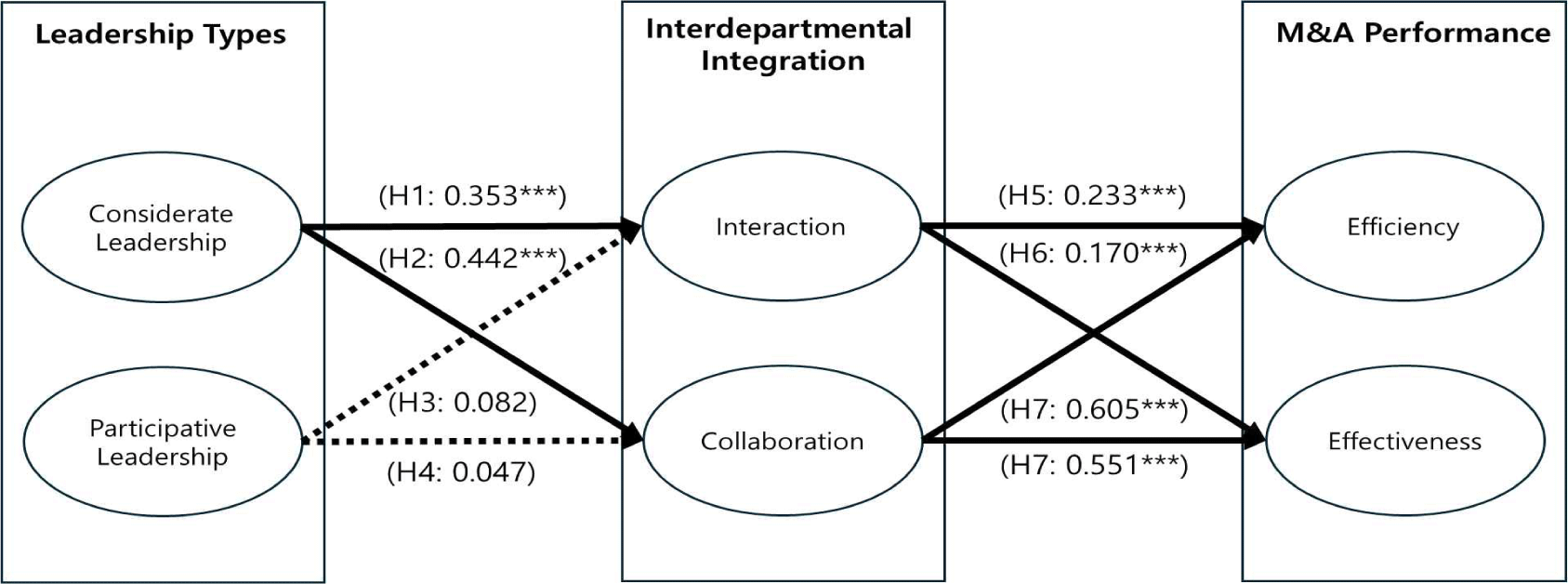
The group analysis comparing Korean Air and Asiana Airlines found differences in how leadership styles influence integration and performance, unlike the results from the full dataset analysis. Considerate leadership significantly influenced both interaction and collaboration in both airlines. In contrast, participative leadership showed differing effects, as it was not significant in Korean Air but had a positive influence in Asiana Airlines. This suggests that Asiana’s organizational culture may be more receptive to participative leadership, or that employees may particularly value such leadership due to concerns about potential disadvantages during the merger process. These differences likely reflect the uncertainty faced by Asiana employees, especially regarding possible structural disadvantages following the merger.
Furthermore, unlike the full dataset and Korean Air analysis results, interaction was found to have no statistically significant effect on efficiency and effectiveness in Asiana Airlines. This may indicate that interaction plays a relatively less important role than collaboration within Asiana’s organizational culture and workflows. Other factors, such as structured collaboration, might have a greater impact on post-merger performance. However, this interpretation should be approached cautiously given the limitations of this study and the characteristics of the sample, and further in-depth research is needed to better understand Asiana’s organizational culture and integration process.
This recent study has significant and meaningful academic and managerial implications. The findings of this study will yield valuable insights into the significant impact of leadership styles on the M&A performance of airlines currently involved in M&A within the Korean airline industry. It is evident that considerate leadership will be a strong motivator for sustainable post M&A performance through its influence on the interaction and collaboration of interdepartmental integration. However, it is expected that participative leadership will not be a strong motivator for interaction and collaboration due to the corporate culture and the traits of the national culture.
In terms of academic implications, this study is expected to contribute significantly by filling the research gaps in previous literature. It analyzes the connections between leadership styles and the future M&A performance of airlines, focusing on both efficiency and effectiveness through future interaction and collaboration. Previous studies on airline M&A have explored various aspects such as airline cost, economy, alliances, and size. However, this study tested and validated the impact of considerate leadership on M&A performance, including efficiency and effectiveness through the collaboration of future interactions and interdepartmental integration, approaching airline M&A from different angles. Moreover, the findings from the SEM analysis demonstrated that the mediation roles of future interaction and collaboration in interdepartmental integration were considerably important for airline M&A performance. However, participative leadership was revealed to be less significant in fostering interaction and collaboration for interdepartmental integration.
In terms of managerial implications, this research offers meaningful insights for the management levels that are deeply involved in the M&A process of Korean Air and Asiana Airlines. First, considerate leadership was revealed to have a positive impact on sustainable post M&A performance through the future interdepartmental integration of interaction and collaboration. Given the intense rivalry between Korean Air and Asiana Airlines, it is expected that considerate leadership based on trust and respect between leaders and team members will be a powerful vehicle to merge the two teams into one for a successful M&A completion. Second, as both airlines have a long seniority of employees, participative leadership may not provide a positive influence on the integration of both airlines into one organization, as the results of this research have shown. Based on the specific results of this research, it is expected that the management levels of both airlines should consider the influence of leadership styles on the post M&A performance through interdepartmental integration for the successful M&A of Korean Air and Asiana Airlines.
This research had several notable limitations. First, as the study was conducted in the early stage of the M&A process, prior to any actual organizational integration, it was limited to examining the potential influence of leadership styles on future M&A performance through the mediating role of interdepartmental integration from a predictive perspective. Second, due to a lack of previous studies on leadership in the context of airline M&As, this study relied on limited literature from other industries and adopted a narrow set of mediators, resulting in constrained findings. Third, as this study was conducted in 2022 prior to the approval of the business combination by major competition authorities in the EU and the US, this research was limited in fully capturing the regulatory uncertainties and potential organizational changes surrounding the merger process. This limitation will provide an opportunity for future research to conduct a longitudinal comparison between employees’ perceptions in 2022 and those after the completion of integration, in order to more precisely examine the gap between theoretical expectations and actual integration experiences. Third, the high number of surveys from non-administrative staff, 82%, remained as a limitation. During the M&A process, it is expected that administrative staff will have a higher engagement and impact on the M&A process, while non-administrative staff will be more involved in implementation. The limitations in this research will provide an opportunity for future research to investigate new findings considering various aspects through a comparative study before (theoretical) and after (real experience) an M&A.


