
 PDF Download
 PubReader
 Export Citation
 Email the Author
 Share Facebook
 Share Twitter
 Cited by 0 Article
 Metrics (View:15)






Ⅰ. Introduction
Modern industry is entering an era of unprecedented digital transformation (DX) amid the Fourth Industrial Revolution. The widespread adoption of artificial intelligence (AI) technology is driving changes in business processes and paradigms across all industrial sectors, and the aviation safety field is no exception. Whereas aviation safety management in the past relied on a reactive approach—investigating causes after an accident occurred—we are now at a turning point where the paradigm is shifting toward a proactive and predictive approach that preemptively mitigates potential risks. The advancement of AI technology is further accelerating this transition. In line with this trend, the International Civil Aviation Organization’s (ICAO) Global Air Navigation Plan (GANP) has outlined a direction for using AI to process vast amounts of aviation data to enable predictive analytics, decision support, and rapid response. Furthermore, ICAO Doc 10159 (Safety Intelligence) has introduced the "Safety-II" concept, aiming to bring about a major paradigm shift toward ensuring the sustainability of safe operations through AI-based analysis of normal flight data.
Currently, the majority of airlines operate Safety Management Systems (SMS) in accordance with ICAO Annex 19; however, in terms of actual operations, they face the phenomenon of "data silos". Safety-related data held by departments such as operations, maintenance, air traffic control, and cabin crew is fragmented and managed across different systems, making it virtually impossible to conduct integrated analysis that organically combines the data to derive actionable insights. The core objective of Safety Intelligence is to overcome the limitations of these fragmented systems and comprehensively analyze enterprise-wide risks to uncover hidden risks within the system.
The purpose of this study is to propose a specific implementation model for a Safety Intelligence (SI) system that airlines should adopt, based on the perspectives outlined in Annex 19, Doc 9859, and Doc 10159. To this end, this paper adopts a comprehensive perspective that encompasses both technical architecture and changes in organizational culture, and aims to provide an in-depth examination of specific SI system design, strategies for cross-departmental data integration, and measures for implementing a ‘Just Culture’ as a prerequisite for data sharing. Methodologically, this study is not an empirical study that presents the results of data analysis or system implementation. Rather, it is an exploratory design study that proposes a conceptual and structural SI framework applicable to airlines, based on an analysis of ICAO documents and related literature. Accordingly, the proposed framework focuses on architectural design and implementation strategies, while empirical validation using actual airline data is addressed as a future research task.
II. Main Body
ICAO ASBU Block 2 (2025–2030) centers on data integration and trajectory-based operations (TBO). In particular, the introduction of SWIM (System-Wide Information Management) provides airlines with the opportunity to link their previously fragmented internal data to global standard frameworks (such as FIXM, AIXM, and IWXXM) and share it in real time. In this digital environment, airlines can use AI to transform the collected data and utilize it as a decision-making tool.
SWIM-Based Real-Time Data Fusion and Risk Identification: The SI platform proposed in this study does not transmit the airline’s sensitive data (QAR, maintenance logs) externally. Instead, it uses SWIM to receive standardized digital data (METAR, TAF, NOTAM, etc.) from external agencies and weather systems in real time and integrate it into the airline’s internal secure cloud environment. This approach ensures that the security of internal sensitive data and pilot privacy are strictly maintained, while simultaneously establishing a proactive safety system that safely detects potential risks to the airline’s flights caused by changes in the external environment through real-time fusion analysis with external environmental information.
Precise Safety Prediction Modeling in a TBO Environment: Trajectory-Based Operations (TBO), the core of ASBU Block 2, maximizes the predictability of aircraft flight trajectories. Airlines must utilize the high-precision flight plan and trajectory data generated in a TBO environment as a core source for their SI system. This enables them to move beyond traditional two-dimensional safety analysis and build predictive safety analysis models that incorporate spatiotemporal context (4D Trajectory). This serves as a critical data foundation for preventing unpredictable safety incidents in an increasingly complex aviation operations environment.
Collaborative Safety Intelligence (Collaborative SI) through External Data Integration: Next-generation aviation safety management goes beyond analysis conducted solely by airlines, aiming for data transparency and collaborative responses with external relevant agencies starting from the pre-flight stage. This implies that airlines must move beyond simply receiving air traffic control or environmental information to a system where they proactively identify risk information and jointly mitigate risks. Therefore, an airline’s SI system must be designed to ensure interoperability that enables the secure exchange of potential risk information with external platforms, thereby maximizing flight safety and decision-making efficiency based on integrated data.
These technological advancements based on ASBU Block 2 inevitably require the comprehensive digitization of data processed by airlines, thereby justifying the transition from existing management systems to big data and predictive analytics systems. Consequently, airlines must proactively respond to these macro-level changes by swiftly strengthening their enterprise-wide data processing infrastructure and safety data analysis capabilities.
ICAO DOC 10159 (Safety Intelligence, SI), published in 2025, is a concept that complements and expands upon the existing safety management system (SMS), providing a framework for transforming safety data into AI-driven insights that go beyond mere regulatory compliance. SI can be defined as follows:
"Safety Intelligence is the capability to transform safety data and information into meaningful knowledge that supports decision-making, enabling proactive and predictive safety management."
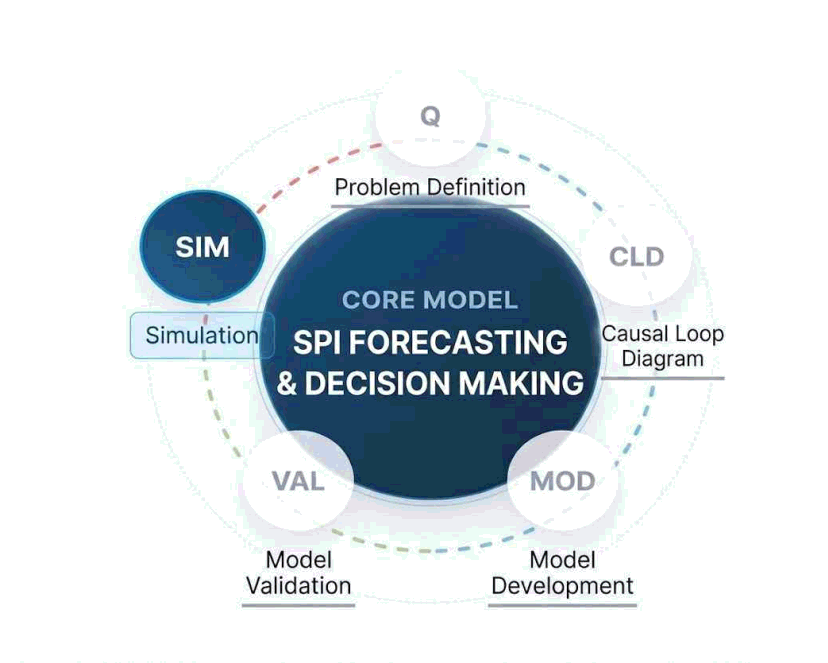
This definition makes it clear that the focus is not merely on collecting safety data, but on analyzing that data to derive actionable insights—that is, insights that lead to practical, meaningful actions. Fig. 1 presents an SI implementation based on the DOC, with the goal of enabling data-driven decision-making. Based on the development objectives and direction outlined in the manual, a framework such as the one shown in Fig. 1 can be proposed.
Doc 10159 emphasizes the following as key elements for establishing a Safety Intelligence (SI) system.
Data Governance: A system of policies, procedures, and responsibilities covering the entire process of data collection, storage, processing, analysis, sharing, and disposal. Data quality, security, and privacy protection are key.
Integrated Safety Data Collection and Processing System (SDCPS): A system that comprehensively collects and processes safety data from various sources. It includes both structured and unstructured data.
Advanced Analytical Techniques: The ability to identify and predict potential risks using machine learning, artificial intelligence, statistical modeling, and other methods.
Actionable Insights: The process of deriving and implementing specific safety improvement measures based on analytical results.
These elements are essential for airlines to take their existing SMS to the next level and secure stronger, more proactive safety management capabilities.
The existing SMS has contributed to regulatory compliance and the establishment of a baseline safety management system. However, it has clear limitations in terms of data integration, analytical sophistication, and decision support (Table 1).
An integrated SI system is defined as an intelligent platform that goes beyond a simple data repository to organically integrate enterprise-wide safety data and support real-time decision-making through advanced AI-based analysis. In this study, reflecting the recommendations of ICAO Doc 10159, we propose the following four-layer architecture.
This layer serves as the foundation of the SI system and is responsible for collecting all data generated across aviation operations. Data is systematically loaded and categorized into structured, unstructured, and real-time data based on its nature and collection method.
QAR (Quick Access Recorder) / FD (Flight Data): Data that records hundreds of aircraft parameters during flight at intervals of one second or less; this is the core data used to analyze aircraft performance quantitatively.
ACARS (Aircraft Communications Addressing and Reporting System): A digital data communication system between aircraft and ground systems. It transmits engine performance, fuel consumption, system fault codes, and other data in real time during flight.
Maintenance Logs: All data related to aircraft maintenance, including maintenance records, parts replacement history, and failure reports. This data is used to analyze the reliability of aircraft systems.
Flight Schedule & Crew Data: Essential data for fatigue risk management (FRMS) and human factors management, including crew flight schedules, flight hours, and rest history.
Safety Report (FOR/ASR): A narrative safety report voluntarily submitted by flight and maintenance personnel, providing an analysis of potential hazards and human and environmental factors.
Operational Manuals (FOM/POM/SOP): Documents outlining operational procedures and regulations. These can be used for analyzing regulatory compliance and procedural complexity through text mining.
Digital Data Links and Air Traffic Control Messages (Data Link & ACARS Communications): These include CPDLC (Controller-Pilot Data Link Communications) logs and ACARS preformatted text data, which are records of digital communications between air traffic control authorities and aircraft. To overcome the technical and legal limitations on the collection of voice communications, we utilize pre-systematized digital text logs; these serve as foundational data for analyzing errors in instructions issued during flight and for evaluating situational awareness.
AMDAR (Aircraft Meteorological Data Relay): Meteorological data (temperature, wind, turbulence, etc.) collected and transmitted by an aircraft during flight. It is used for real-time meteorological hazard prediction.
ADS-B (Automatic Dependent Surveillance-Broadcast): A system that periodically broadcasts an aircraft’s position, speed, altitude, and other data. It is used for real-time flight path monitoring and the prediction of mid-air collision risks.
To efficiently integrate these heterogeneous data sources, this study adopts a cloud-based Data Lakehouse architecture. Along with establishing a real-time data collection pipeline (Streaming Pipeline) for large-scale data, this architecture provides a standardized data management environment where all data assets are exposed via APIs for reuse across enterprise systems.
The ultimate goal of aviation safety management is to comply with established Safety Performance Targets (SPTs) and to quantitatively demonstrate that performance through Safety Performance Indicators (SPIs). In traditional SMS systems, SPI/SPT management was limited primarily to reactive indicators; however, the integrated SI system proposed in this study evolves this approach into a predictive model, thereby creating tangible safety value.
Transition to Leading Safety Indicators (Leading SPI): A system of retrospective indicators that merely manages the number of accidents and near-misses has limitations in addressing future risks. The SI platform analyzes QAR (Flight Data Recorder) and real-time flight path data to automatically calculate leading safety indicators (Leading SPI) that signal precursors to safety incidents, such as the stability of the landing approach trajectory and the precision of pilot maneuvers during adverse weather conditions. This enables organizations to recognize that risk levels are rising even before an accident occurs and to implement mitigation measures.
Dynamic SPT Optimization Based on Data: Traditional SPTs were configured based on past experience or static criteria but failed to immediately reflect changes in the operational environment. The integrated SI platform uses AI models to combine variables such as aircraft-specific performance data, weather difficulty by destination, and pilot proficiency to calculate a Dynamic SPT optimized for each flight route and operating environment. This ensures the validity of the targets while providing pilots and field personnel with realistic and achievable safety goals.
Data-Driven Root-Cause Analysis for Performance Improvement: When target values are not met during SPI/SPT monitoring, the system traces the cause back using a System Dynamics model. For example, if the Unstable Approach Indicator (UA SPI) rises on a specific route, the platform does not simply attribute it to an issue with the flight crew. Instead, it conducts an integrated analysis of maintenance history (component performance degradation), training history (pilot conversion training), and airport infrastructure information (NOTAM) to identify the root cause of the deterioration in the indicator.
Maximizing the Synergy Between Safety and Efficiency: The SI platform combines data obtained during the SPI compliance process with operational efficiency metrics. While establishing optimized standard operating procedures (SOPs) to improve safety indicators, it automatically analyzes fuel consumption rates and flight delays to generate an optimal operational model that "enhances safety while reducing costs." This redefines safety not as a cost item disconnected from revenue, but as a strategic asset that determines an airline’s operational competitiveness.
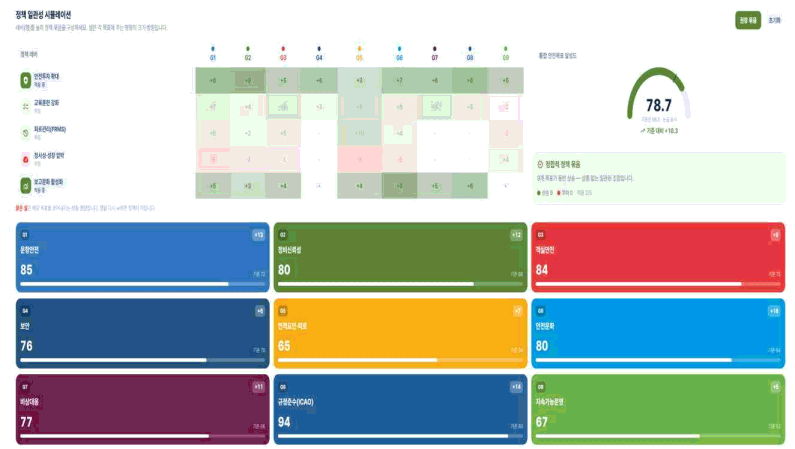
Consequently, as shown in Fig. 2, the integrated SI platform uses AI technology to accelerate the "Plan–Do–Check–Act" loop based on real-time SPI calculations and predicted SPT, thereby supporting the full internalization of the organization’s safety culture into a quantitative, data-driven decision-making system (D3M).
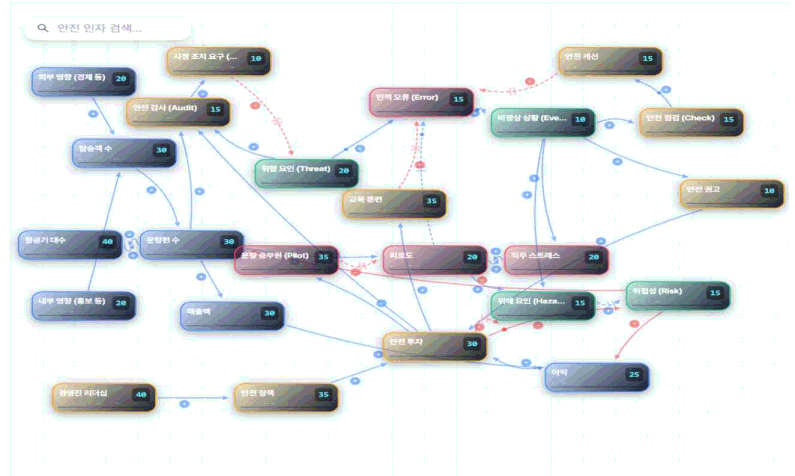
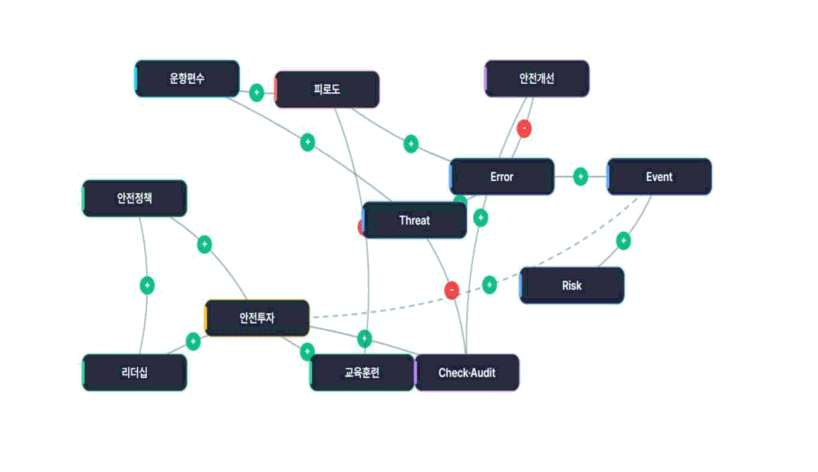
The raw data collected for implementing the SI model exists in various forms. As shown in Fig. 3, the data comprising the SMS has interdependent relationships and a complex structure. Deriving causal relationships and correlations among the data is a key process for improving the model’s accuracy. This process involves performing data conversion and data quality enhancement optimized for the nature of the data, transforming it into analysis-optimized data (AI-Ready Data) that meets the level of consistency required by the intelligent platform.
Data Cleaning: Standardizes data quality by filling in missing values, identifying and removing outliers, and unifying data formats. In particular, it corrects errors in QAR’s physical sensor data and refines typos in ASR—which is unstructured data—to ensure data reliability.
Data Transformation: This process standardizes time series units, time zones, and measurement units—which vary across data sources—to international standards. This is an essential prerequisite for deriving consistent analytical results in a multi-aircraft, multi-route flight environment.
De-identification: This is an essential process for establishing a Just Culture. Information that can identify individuals, such as employee ID numbers and specific flight numbers, is protected by deletion or encryption techniques. This establishes a system of trust ensuring that the data is used solely for the purposes of enhancing safety and improving the system.
Data Integration: Different heterogeneous datasets are semantically combined to build a multidimensional integrated dataset. For example, this includes the process of synchronizing and analyzing a specific flight’s QAR flight path data with the crew schedule and weather information from that time.
The airline’s SI platform is designed based on a cloud-native architecture and is expected to utilize managed distributed processing services such as Google Cloud’s BigQuery Data Transfer and Spark. It is designed to process the vast amounts of operational data generated in real time without delay.
Aviation safety data is dispersed across operations, maintenance, training, procedures, safety events, weather, airport operations, and various reports, and is often managed using different formats and standards. This data holds greater significance when its relationships are connected than when it exists in isolation. In this study, we propose a Knowledge Graph (KG) as the integration structure for such data.
A Knowledge Graph is a method of representing key elements—such as aircraft, flights, crew members, maintenance history, safety events, procedural documents, weather, and airports—by connecting them based on entities and relationships. This approach allows us to understand a specific incident not merely as a single record, but within the context of which aircraft and maintenance status, which weather and airport conditions, and which procedures and operational context it occurred in.
This structure offers several advantages: first, it enables the integration of data scattered across various departments within an airline into a single semantic framework; second, it allows for the linking of unstructured information, such as safety reports and procedural documents; and third, it can serve as the foundational framework for future AI-based risk prediction or executive Q&A systems. Therefore, the Knowledge Graph can be viewed not merely as a data storage method in the digital transformation of aviation safety, but as a core connecting structure that underpins the Safety Intelligence system.
This layer is the core component that generates actionable information based on integrated data. It utilizes machine learning and artificial intelligence (AI) technologies to predict potential risks, identify patterns, and derive actionable insights.
Anomaly Detection: This function automatically identifies flight patterns that deviate from normal ranges, potential maintenance defects, and unusual scenarios involving human factors. It involves uncovering "hidden risks"within the data and proactively identifying unstructured risk patterns. For example, it can capture subtle and abnormal behavior patterns of specific control surfaces within vast QAR data or detect early warning signs of engine performance degradation (such as EGT margin). To implement this module, unsupervised learning algorithms optimized for large-scale data analysis—such as Isolation Forest and One-Class SVM—are primarily utilized.
Risk Prediction Models: This function quantifies the probability of future risks arising from specific combinations of conditions, based on historical near-miss records and data on safety-compromising factors. Unlike detection modules that identify anomalies in individual equipment, its purpose is to derive quantitative probabilities from the complex causal relationships between environmental and organizational factors. For example, it calculates in advance the probability of an unstable approach occurring when the multidimensional conditions [specific airport * adverse weather conditions * crew fatigue] are combined, and sends a warning to the control room prior to flight. To implement this module, supervised learning models such as Random Forest, Gradient Boosting Machine (GBM), and Neural Networks are primarily used.
Generative AI-Based Intelligent Text Analysis: To analyze the vast amounts of unstructured text data from transcriptions—such as ASR and MOR—the system introduces an intelligent analysis framework that combines Large Language Models (LLMs) with a RAG (Retrieval-Augmented Generation) engine. Going beyond simple keyword matching, this system uses semantic search and context-aware technologies to autonomously infer the complex context and warning signs hidden within field personnel’s descriptions. In particular, it cross-references internal regulations and operational manuals (such as FOM and POM) in real time and explicitly states the basis for its responses using RAG, thereby preventing AI hallucination. It also provides actionable safety guidance that minimizes cognitive load at each flight phase, automatically identifying potential hazards and operational trends.
System Dynamics Modeling: This approach models the interactions among various elements (human, technical, organizational, and environmental) within complex aviation systems to simulate the impact of specific changes on the entire system. The causal map designed in Fig. 4 goes beyond simple correlation analysis to identify causal relationships and is useful for predicting the effects of policy changes.
This layer serves as an interface and service layer that delivers the analysis results generated by the Safety Intelligence Layer to end users (pilots, maintenance technicians, safety managers, and executives) and supports their use in actual decision-making. This layer goes beyond simple information visualization; its purpose is to enhance the practical applicability of the analysis results through the delivery of risk signals, role-based customized briefings, maintenance alerts, the generation of reports for executives, and question-and-answer functions. Furthermore, by incorporating role-based access control, de-identification, auditability, and the ability to provide evidence, it ensures the reliability and accountability required in the field of aviation safety.
The safety dashboard serves as the core interface through which safety managers and field personnel monitor the safety status of the entire airline. In this study, we propose a "Safety Search"architecture that moves beyond the conventional static display of graphs and charts; instead, it generates a customized dashboard view instantly when a user enters a query in natural language into a single search bar, similar to Google or Gemini.
Dynamic Visualization: For example, if a user enters "Please summarize the occurrence of unstabilized approaches at Incheon International Airport (ICN) over the past six months"into the search bar, the system does not display a fixed template chart; instead, it combines and processes structured and unstructured data in real time that matches the specified conditions (Incheon International Airport, past six months, unstabilized approach parameters). Specifically, through real-time queries, the system dynamically generates and renders on the dashboard a trend line showing the monthly incidence rate of unstabilized approaches based on QAR data, a scatter plot illustrating the correlation with meteorological factors (METAR/TAF) such as strong winds or wind shear, and a graph depicting deviations from the approach path at that time. At the same time, a card-style view summarizing the results of qualitative text analysis from safety reports (ASRs) voluntarily submitted by pilots at the time (e.g., mentions of delayed air traffic control instructions or topographical characteristics during approaches to specific runways) is displayed alongside the data to aid contextual understanding.
Context-Aware Search: Keywords included in the search query—such as "Gimpo Airport," "Taxiway,"and "Incursion"—are linked to the Knowledge Graph described in Section 2.6 to automatically trace semantic connections between structured data (QAR, maintenance logs) and unstructured data (ASR reports, weather information). This goes beyond a simple search for documents containing specific words to provide a comprehensive real-time risk dashboard that integrates the relevant context and causal relationships.
The pilot-tailored briefing service is a feature that comprehensively considers information related to the specific flight—including the route, airports, weather, aircraft type, maintenance status, and operational restrictions—and provides a summary of potential risk factors and past similar cases. This helps pilots efficiently review key information they need to be aware of before a flight and contributes to enhancing their level of risk awareness prior to flight. Going beyond a simple summary, this service enhances situational awareness and decision-making support by providing links to relevant procedural documents, recommended actions, and past case studies.
The Predictive Maintenance Alert System detects early warning signs of abnormalities in aircraft components and systems and suggests the optimal timing for inspection or maintenance to maintenance technicians. This helps reduce unplanned maintenance and improves aircraft availability and on-time performance. This system prioritizes components with a high probability of failure by linking them to recurring defects, anomaly patterns based on ATA classifications, deferred items, and MEL/CDL conditions, therebyproviding a basis for reference in the maintenance decision-making process. It also enhances usability in operational environments by including features for managing false positives and missed detections, integration with maintenance approval procedures, and history tracking.
At the executive level, there is a need for functionality that allows executives to generate decision-support materials directly through integrated safety data and document-based queries, rather than relying on in-person briefings from individual departments. To this end, this study proposes an executive decision support system that includes LLM-based search and report generation capabilities. This functionality goes beyond a simple conversational chatbot; it performs evidence –based question-and-answering and automated report generation based on a RAG (Retrieval-Augmented Generation) architecture that combines documents, metrics, a knowledge graph, and analytical results.
Specifically, executives can pose queries such as "What are the key safety risks for the most recent quarter?", "What caused the increased risk at a specific airport or for a specific aircraft type?", and "How have risk indicators changed following maintenance investments or enhanced training measures?" In response, the system provides summarized results along with relevant indicators, risk factors, the status of corrective actions, supporting documents, and links to related events. Additionally, it automatically generates monthly, quarterly, and board-level reports using standard templates, thereby reducing the time required to prepare briefing materials and supporting data-driven decision-making.
However, when utilizing generative AI in the field of aviation safety, there are risks of "hallucinations"and inaccurate generalizations; therefore, this feature must be operated under the following control principles. First, LLM responses must be based on verifiable evidence such as documents, data, and the Knowledge Graph. Second, permission -based search and response controls must be applied according to user roles and security clearance levels. Third, personal and sensitive information must be processedin accordance with de-identification policies. Fourth, the generated results are recommendations and drafts, not final decisions, and must be integrated with human-in-the-loop procedures. Fifth, query histories and supporting data must be logged to ensure auditability.
Consequently, this layer serves to deliver the analytical results generated by the Safety Intelligence Layer in a manner tailored to user roles and to transform them into a format that can be practically utilized in operational settings and management decision-making processes.
The successful establishment of an SI system depends as much on the voluntary participation of organizational members and cultural change as it does on technical implementation. The key strategies for data acquisition are as follows.
Airline executives often perceive safety investments as "unprofitable insurance premiums" or "necessary costs for regulatory compliance." However, an integrated SI system should go beyond simply enhancing safety to provide the following direct economic benefits, thereby fostering a perception of safety as a "strategic asset" rather than a "cost."
Improved Operational Efficiency and Fuel Savings: By precisely analyzing flight data to derive optimal flight profiles (altitude, speed, and route) and incorporating these into pilot training and operational procedures, fuel consumption can be minimized. For example, analyzing the optimal landing path at a specific airport reduces unnecessary circling and go-arounds, thereby saving fuel.
Cost Savings Through Predictive Maintenance: By analyzing sensor data from aircraft components and maintenance history, signs of failure can be detected in advance, and the timing of component replacements can be optimized. This significantly contributes to minimizing Aircraft On Ground (AOG) time caused by unplanned maintenance and reducing maintenance costs.
Reduced Insurance Premiums and Increased Corporate Value: A sophisticated safety management system and a low accident rate provide a favorable position in negotiating aviation insurance rates. Furthermore, investment in and innovation regarding safety strengthen corporate social responsibility (CSR) and enhance brand image, leading to long-term growth in corporate value.
The greatest obstacle to data-driven safety management is the "fear of surveillance" among frontline personnel. If frontline staff—such as pilots and maintenance technicians—do not honestly report their mistakes or observations, the SI system becomes useless. To address this, it is essential to technically implement "Just Culture."
Application of the "Privacy by Design" Principle: Privacy is given top priority from the design phase of data collection and processing systems. All data must undergo de-identification or pseudonymization at the point of collection, and access to personally identifiable information is restricted to strictly controlled environments.
IAM (Identity and Access Management)-Based Least Privilege and Audit Controls: Data access permissions are strictly controlled at the system level through the IAM framework. Applying the Principle of Least Privilege, only the essential permissions required for each job role and safety analysis purpose are granted in a granular manner. Furthermore, all records of data access, query searches, and analysis module executions are logged in tamper-proof audit trail logs and permanently retained. This technically guarantees that data is used transparently solely for the purpose of enhancing safety, thereby establishing a relationship of trust with field personnel.
Operation of a Joint Labor-Management Safety Committee: A joint labor-management safety committee is operated, in which representatives of on-site personnel participate in the process of establishing and enforcing data utilization policies, thereby ensuring transparency and fairness in data use. This plays a pivotal role in building trust among employees and fostering a culture of voluntary data sharing.
Implementing a culture of fairness can strengthen the SMS by encouraging a culture of voluntary reporting, establishing a data collection system, and securing high-quality data. In Korea, the role and functions of the Culture of Fairness Committee are gaining prominence, and a decision-making system based on the Fair3 behavioral types is becoming established. Therefore, utilizing SI enables scenario simulations based on these behavioral types and minimizes decision- making errors.
For the integrated SI platform proposed in this study to function effectively in practice, an optimal organizational structure that guarantees independence within the organization and data accessibility must be established first. Considering the typical safety organizational structure of domestic airlines, it is most appropriate for the dedicated SI department (hereinafter referred to as the "Safety Intelligence Team") to operate independently, completely separated from operational departments such as flight operations, maintenance, and cabin crew.
Regarding the specific organizational structure of the Safety Intelligence Team, this study proposes establishing it as an independent unit reporting directly to the Chief Safety Officer (CSO) or the Chief Safety Executive, on an equal footing with the department responsible for post-incident investigations. This approach offers the following strategic advantages.
First, based on its physical proximity to departments within the existing corporate-wide Safety Headquarters responsible for SMS operations, human factor analysis, and safety investigations, it can seamlessly integrate the safety reports, qualitative human error data, and accident investigation data essential for SI operations.
Second, by separating the unit from general safety management organizations responsible for routine safety administrative tasks—such as regulatory compliance and quality assessments—it ensures the inherent neutrality and independence of data analysis and prevents confirmation bias. This serves as an institutional foundation for establishing a just culture by dispelling concerns regarding the misuse of sensitive flight data voluntarily provided by field personnel.
Third, through formal collaboration processes with dedicated IT and information security departments that oversee the company’s information assets and system security, it is possible to advance de-identification technologies for sensitive flight data and ensure the physical and cyber security of safety data transmission pipelines to a trusted level.
For the SI system to be successfully established in the field, data collection must be perceived not as a "work burden" but as a means to "improve work efficiency." To this end, an AI-based "Safety Assistant" service is provided to encourage field personnel to become both the primary producers of data and its greatest beneficiaries.
An AI assistant service designed to reduce pilots’ pre- and post-flight workload and support safety decision-making can be provided in the following form.
Smart Briefing: In addition to existing briefing materials, AI analyzes the characteristics of the specific flight (Flight Plan, NOTAM, weather, and other flight information) to summarize potential risk factors and provide customized warnings and recommendations based on past similar cases (using ASR and QAR data). For example, it enhances pilots’ situational awareness by providing information such as instances where wind shear occurred frequently on a specific runway at a particular airport, or reports of frequent system malfunctions in similar aircraft models.
Intelligent Decision Support: It structures vast amounts of flight operation manuals (FCOM, POM, FOM) to perform real-time analysis and proactively provides response procedures and checklists optimized for situational awareness. This minimizes the pilot’s cognitive load and supports rapid and accurate decision-making during emergency situations.
Post-flight Feedback: Analyzes pilots’QAR data after a flight to provide visualizations of deviations from standard flight profiles and trends in specific maneuvers. This helps pilots objectively evaluate their flying habits and improves their flying skills through self-directed learning. All feedback is provided solely for training and improvement purposes to authorized users and must be provided separately from performance evaluations.
Maintenance Technicians-Fault Diagnosis and Prediction Support: The AI assistant analyzes real-time sensor data from aircraft systems and historical maintenance records to predict potential failure points and provide diagnostic guidance for efficient troubleshooting. It also includes a feature that quickly locates necessary information within complex maintenance manuals.
Cabin Crew-Emergency Procedure and Passenger Management Support: For cabin crew, the AI assistant quickly guides them through necessary procedures during emergencies and provides customized information on specific passengers (e.g., those requiring medical assistance) to facilitate safe and efficient passenger management.
These field-centric SI services will foster a sense among team members that "this data is for me" and "this AI service is for me,"serving as a strong motivator for voluntary data contribution.
K-ASAS (Korea Aviation Safety Analysis System), promoted by the Ministry of Land, Infrastructure and Transport of the Republic of Korea, is a national-level safety big data platform. An airline’s SI platform should not exist in isolation but must be integrated with national standard interfaces. This ensures the availability of national benchmarking data for accident prevention and establishes a foundation for immediate joint public-private responses during emergencies.
Future SI platforms must evolve beyond simple analytical tools to become the airline’s "Digital Twin." Before launching new routes or introducing new procedures, they must serve as the "brain of aviation operations"by conducting tens of thousands of virtual flights based on accumulated data and filtering out potential risks to a minimum using 4D flight paths.
Ⅲ. Conclusion
This study examined a Safety Intelligence (SI) system for the integrated utilization of airline safety data, based on the data-centric aviation safety management perspective presented in Annex 19, Doc 9859, and Doc 10159. In particular, this study pointed out the limitation that existing SMS systems have been operated primarily with a focus on post-incident response and reporting, and proposed an integrated framework—as a next-generation safety management system to address this shortcoming—that includes data integration, AI-based risk detection and prediction, Knowledge Graph-based data linking, generative AI-based decision support, and system dynamics-based simulation.
The key conclusions of this study are as follows. First, the digital transformation of aviation safety is not merely a shift toward informatization but a structural change that transforms safety management from a reactive to a predictive and preventive model. Second, the SI framework must be designed as an integrated structure in which technologies such as anomaly detection, risk prediction, natural language processing, generative AI, and system dynamics operate not in isolation but in a mutually complementary manner. Third, the success of an SI system depends not only on the level of technology but also on data governance, organizational acceptance, and building trust based on a Just Culture. Fourth, when implementing an SI system for an airline, a practical strategy involves expanding the scope incrementally, starting with core safety data—such as safety events, basic flight operations information, maintenance history and aircraft status, training, procedures, and weather information—rather than integratingall enterprise-wide data at once.
Furthermore, this study emphasized that for the SI system to be effectively utilized, a user delivery layer—such as safety dashboards, pilot-tailored briefings, preventive maintenance alerts, and LLM-based report generation for executives—is essential. However, generative AI-based functions must be operated on the premise of verifiable evidence, permission-based access controls, de-identification, and human-in-the-loop procedures.
From a policy and industry perspective, airlines need to recognize SI not as a mere IT project, but as a strategic initiative that combines data governance and organizational culture innovation. In particular, maintenance history and aircraft condition data are directly linked to operational safety and must therefore be included in the scope of core data from the initial stages. Furthermore, the SI system can serve not only to advance safety management but also, in the long term, as a foundation for driving the airline’s enterprise-wide digital transformation.
However, this study has a clear limitation: it did not conduct empirical validation using actual airline datasets. The proposed architecture and technical components were examined at a conceptual and structural level, and data quality issues, model performance, field usability, and organizational effectiveness were not empirically verified.
Therefore, future research should be conducted in the following directions. First, in cooperation with domestic airlines, actual data such as de-identified QAR/FD, ACARS, maintenance logs, ASR/FOR, weather and aeronautical information should be collected. Second, pilot applications should be implemented to evaluate quantitative performance, including the precision and recall of anomaly detection and the AUROC of risk prediction models. Third, user acceptance, decision-making efficiency, and workload reduction should be measured for pilots, maintenance technicians, safety managers, and executives. Fourth, longitudinal analysis should be conducted on changes in Just Culture, voluntary reporting rates, and data governance indicators following SI implementation.


